Enhancing Remote Collaboration with AI Meeting Assistants and Real-Time Presence

In this article

Enhancing Remote Collaboration with AI Meeting Assistants and Real-Time Presence
Modern remote work environments require efficient ways to manage communication and maintain team cohesion. As we move through 2026, the integration of AI meeting assistants has become a standard practice for distributed teams looking to optimize their workflows. These digital tools handle the administrative burden of synchronization, allowing team members to focus on high-value tasks. By capturing discussions and generating actionable insights, AI meeting assistants ensure that no critical information is lost during virtual interactions.
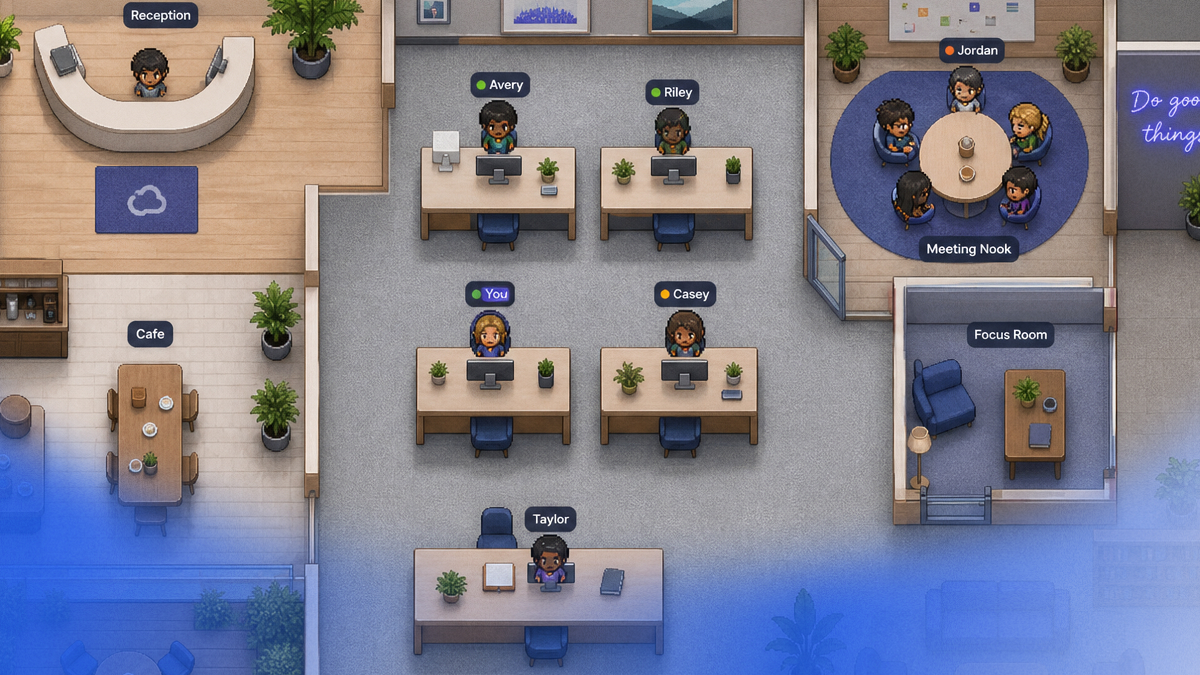
Beyond documentation, the challenge of remote work lies in the lack of spontaneous interaction. This is where platforms like Hurbly.ai bridge the gap. By providing a virtual office environment, it allows users to see who is available, focused, or currently engaged with AI meeting assistants in a session. This real-time visibility mimics the physical office experience, reducing the friction often associated with scheduling formal calls for quick questions.
How AI Meeting Assistants Transform Team Productivity
The primary function of AI meeting assistants is to automate the lifecycle of a digital gathering. These tools join calls to record audio, transcribe speech into text, and identify key decision points. When a team uses AI meeting assistants, they create a searchable archive of every conversation, which is invaluable for onboarding new members or revisiting past strategies. This automation allows participants to stay fully engaged in the conversation rather than distracted by manual note-taking.
In addition to transcription, advanced AI meeting assistants can now perform sentiment analysis and track talk-time ratios to ensure balanced participation. By integrating these AI meeting assistants into a centralized platform, managers can gain a clearer picture of project bottlenecks. When combined with the real-time presence features of Hurbly.ai, teams can decide whether a quick spontaneous chat is better than launching a full session supported by AI meeting assistants.
Optimizing Workflows with Real-Time Presence and AI Tools
Effective collaboration in 2026 relies on knowing the right time to interrupt a colleague. While AI meeting assistants manage the data generated during meetings, presence indicators manage the human element of availability. Hurbly.ai displays current statuses, such as "Deep Work" or "In a Meeting," often synced with the very AI meeting assistants the team uses. This prevents unnecessary interruptions and respects the "flow state" of developers and creatives.
The following table illustrates the differences between traditional communication methods and the modern approach using presence platforms and AI meeting assistants:
| Feature | Traditional Remote Work | Modern Presence + AI Tools |
|---|---|---|
| Availability | Guesswork or "Green Dot" | Real-time status (Focus, Meeting, Away) |
| Documentation | Manual notes or recordings | Automated via AI meeting assistants |
| Interaction | Scheduled video calls | Spontaneous "walk-ups" and instant audio |
| Context | Fragmented chat history | Centralized insights from AI meeting assistants |
Steps to Implement AI Meeting Assistants in Distributed Teams
Transitioning to a highly automated and transparent work environment involves several strategic steps. Organizations must ensure that their choice of AI meeting assistants aligns with their security protocols and communication habits.
- Identify Needs: Determine if the team requires simple transcription or complex task extraction from their AI meeting assistants.
- Integrate Presence: Use Hurbly.ai to visualize team activity, making it clear when AI meeting assistants are active in a room.
- Define Etiquette: Establish rules for when to record sessions and how to use the summaries generated by AI meeting assistants.
- Review and Iterate: Regularly check the accuracy of the data provided by your AI meeting assistants to refine prompt engineering and output quality.
The Future of Virtual Offices and AI Integration
The synergy between virtual office platforms and AI meeting assistants is defining the future of work. As these technologies evolve, the distinction between "being in the office" and "working from home" continues to blur. By utilizing Hurbly.ai, teams can maintain a sense of belonging and immediate accessibility. Meanwhile, the constant support of AI meeting assistants ensures that every hour spent in a digital meeting is productive and documented.
Ultimately, the goal of using AI meeting assistants is to reduce the "meeting tax"—the time lost to unproductive or redundant discussions. When combined with a clear view of team presence, these tools empower freelancers and large organizations alike to operate with unprecedented transparency. As we look further into 2026, the reliance on AI meeting assistants will only grow, making them an essential component of the modern professional toolkit.