Understanding the Dynamics of a Modern Collaborative Workspace
In this article

Understanding the Dynamics of a Modern Collaborative Workspace
A modern collaborative workspace functions as a digital environment where distributed teams manage their daily operations and communication. Unlike traditional office settings, this digital architecture relies on real-time data to synchronize team members across different time zones. By integrating presence indicators and instant communication tools, a collaborative workspace removes the barriers typically associated with remote work, such as the delay in messaging or the fatigue caused by back-to-back scheduled video conferences.
In 2026, the efficiency of a team depends heavily on how information flows within their collaborative workspace. These platforms are designed to show exactly who is available for a quick question, who is deeply focused on a task, and who is currently occupied in a meeting. This visibility ensures that interactions happen at the right time, preventing unnecessary interruptions and fostering a more respectful and productive professional environment.
How Hurbly.ai Enhances Team Presence and Visibility
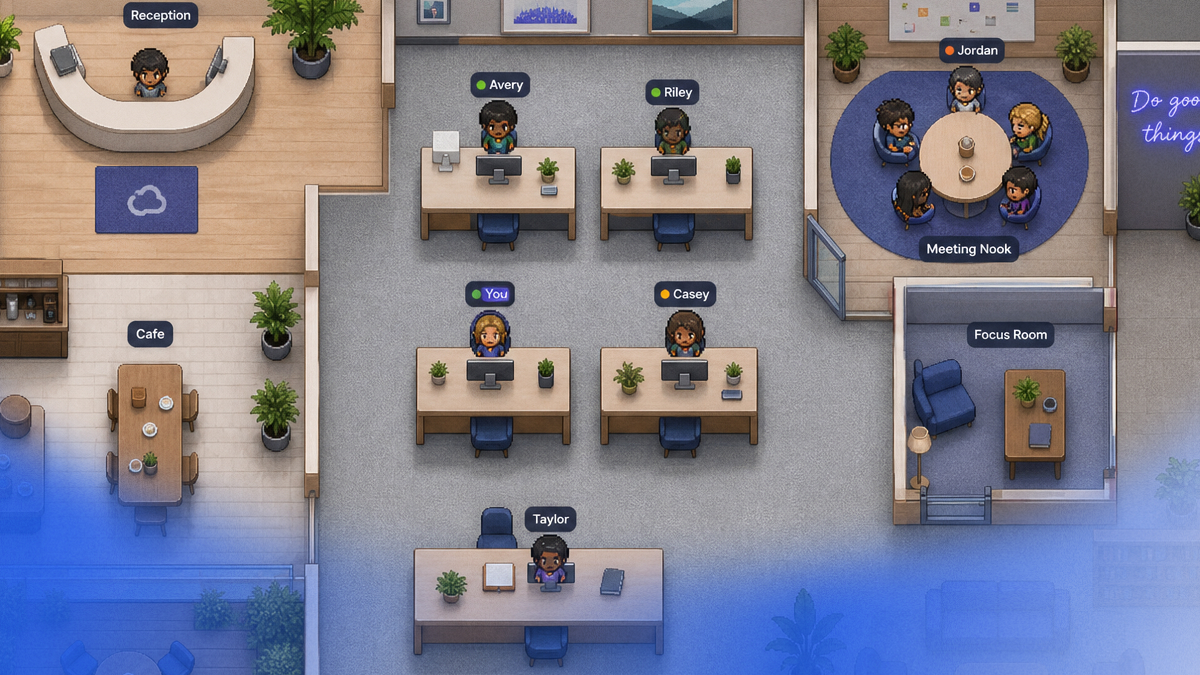
Hurbly.ai serves as a specialized virtual office that transforms a standard digital interface into a high-functioning collaborative workspace. The platform uses live status updates to replicate the spontaneous nature of a physical office. When a team member enters this collaborative workspace, their status is automatically shared, allowing colleagues to see their availability without the need for constant status reporting or manual check-ins.
The core functionality of this collaborative workspace revolves around reducing the friction of starting a conversation. Instead of sending a message and waiting for a reply, or scheduling a formal meeting for a two-minute clarification, users can initiate instant interactions. This immediacy is a cornerstone of a successful collaborative workspace, as it allows for the rapid resolution of problems and the steady progression of project workflows.
Key Features of a High-Performance Collaborative Workspace
To maintain high levels of productivity, a collaborative workspace must offer specific technical features that support team cohesion. These features are not merely social tools but are essential components for operational transparency. A well-structured collaborative workspace typically includes the following elements:
- Real-Time Presence Indicators: Visual cues that signal if a user is active, away, or in "do not disturb" mode.
- Instant Audio/Video Channels: The ability to jump into a quick conversation without generating a meeting link.
- Focused Work Zones: Designated areas within the collaborative workspace that signal to others that a user is performing deep work.
- Team Mapping: A spatial or list-based view that shows how the team is distributed across different virtual rooms or projects.
By utilizing these features, a collaborative workspace helps bridge the gap between remote employees and their managers. It creates a sense of "being there" together, which is often lost in text-heavy communication platforms. This sense of presence is vital for maintaining company culture and ensuring that no team member feels isolated while working from a remote location.
Benefits of Implementing a Collaborative Workspace in 2026
The adoption of a dedicated collaborative workspace provides measurable improvements in team performance and employee satisfaction. By centralizing communication and presence, organizations can reduce the "communication overhead" that often plagues large-scale projects. In a collaborative workspace, the context of a conversation is often clearer because the participants are aware of each other's current work state.
| Benefit Category | Impact of a Collaborative Workspace |
|---|---|
| Efficiency | Reduces time spent on scheduling and waiting for email responses. |
| Transparency | Provides a clear view of team capacity and current activity levels. |
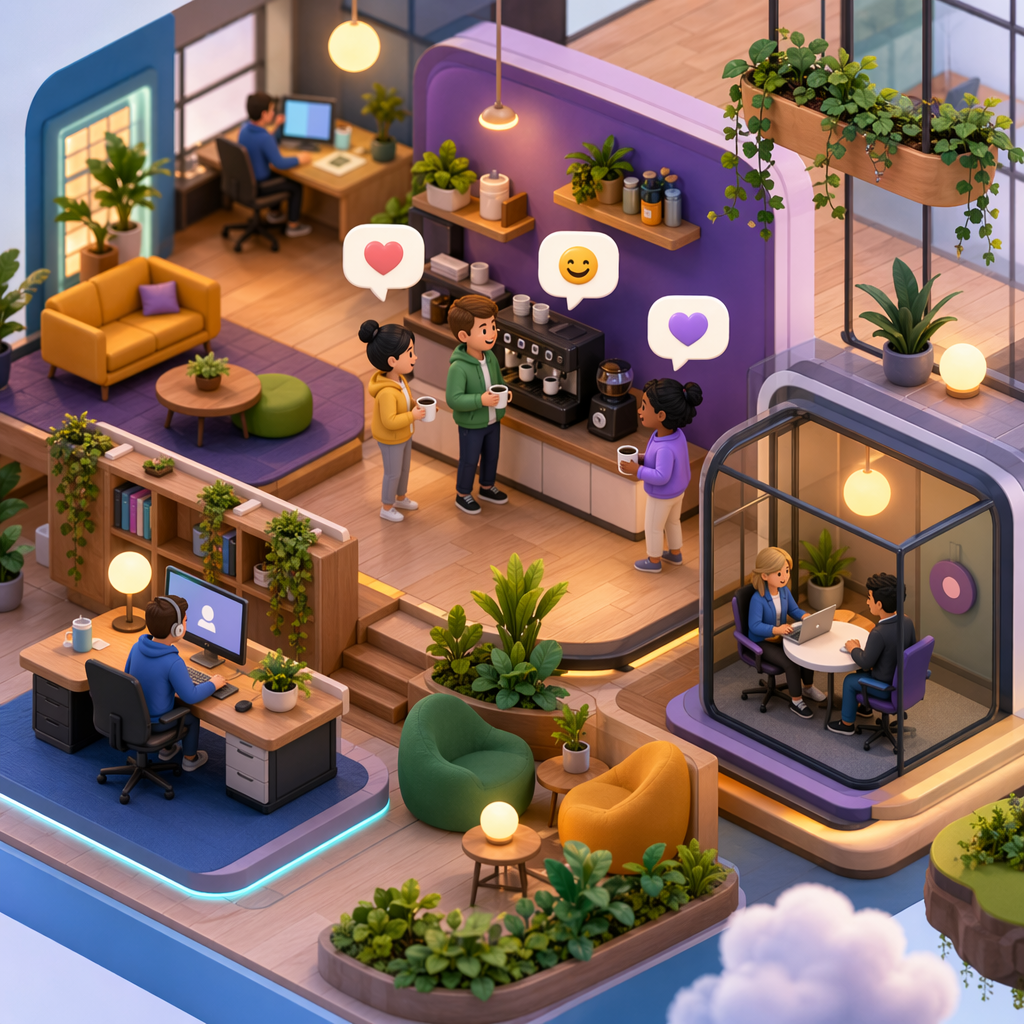
| Spontaneity | Encourages "watercooler" moments that lead to creative problem-solving. |
| Well-being | Decreases meeting fatigue by replacing long calls with short, focused interactions. |
Furthermore, a collaborative workspace supports better work-life balance. When a team member "leaves" the digital office, their status clearly indicates they are offline, helping to set boundaries that are often blurred in remote work. This clear distinction between being "at work" and "away" is a critical feature of the Hurbly.ai philosophy, ensuring that the collaborative workspace remains a tool for productivity rather than a source of constant surveillance.
Optimizing Remote Operations with a Collaborative Workspace
For freelancers and distributed organizations, the collaborative workspace acts as the central hub for all professional engagement. It simplifies the onboarding process for new hires, as they can immediately see the team structure and observe how interactions occur in real-time. This visual learning is much faster than reading through static documentation or handbooks.
Ultimately, the goal of a collaborative workspace is to make digital interaction feel as natural as possible. By focusing on presence and availability, platforms like Hurbly.ai ensure that the human element of work is preserved. As teams continue to evolve in 2026, the reliance on a robust collaborative workspace will only increase, making it an essential investment for any organization looking to optimize its remote or hybrid work model.