Understanding the Evolution and Utility of Coworking Spaces in 2026
In this article

Understanding the Evolution and Utility of Coworking Spaces in 2026
The landscape of professional environments has shifted significantly, placing coworking spaces at the center of modern work culture. These shared environments provide professionals with a structured place to work, offering amenities typically found in traditional offices but with greater flexibility. Unlike private offices, coworking spaces host individuals from various companies, freelancers, and remote teams, fostering a diverse atmosphere that encourages networking and resource sharing.
The primary function of coworking spaces is to provide a reliable infrastructure for those who do not have a permanent physical headquarters. This includes high-speed internet, meeting rooms, and ergonomic workstations. By utilizing coworking spaces, businesses can scale their physical footprint up or down without the long-term commitment of commercial leases. This flexibility is particularly relevant in 2026, as the global workforce prioritizes mobility and cost-efficiency.
Core Features and Operational Benefits
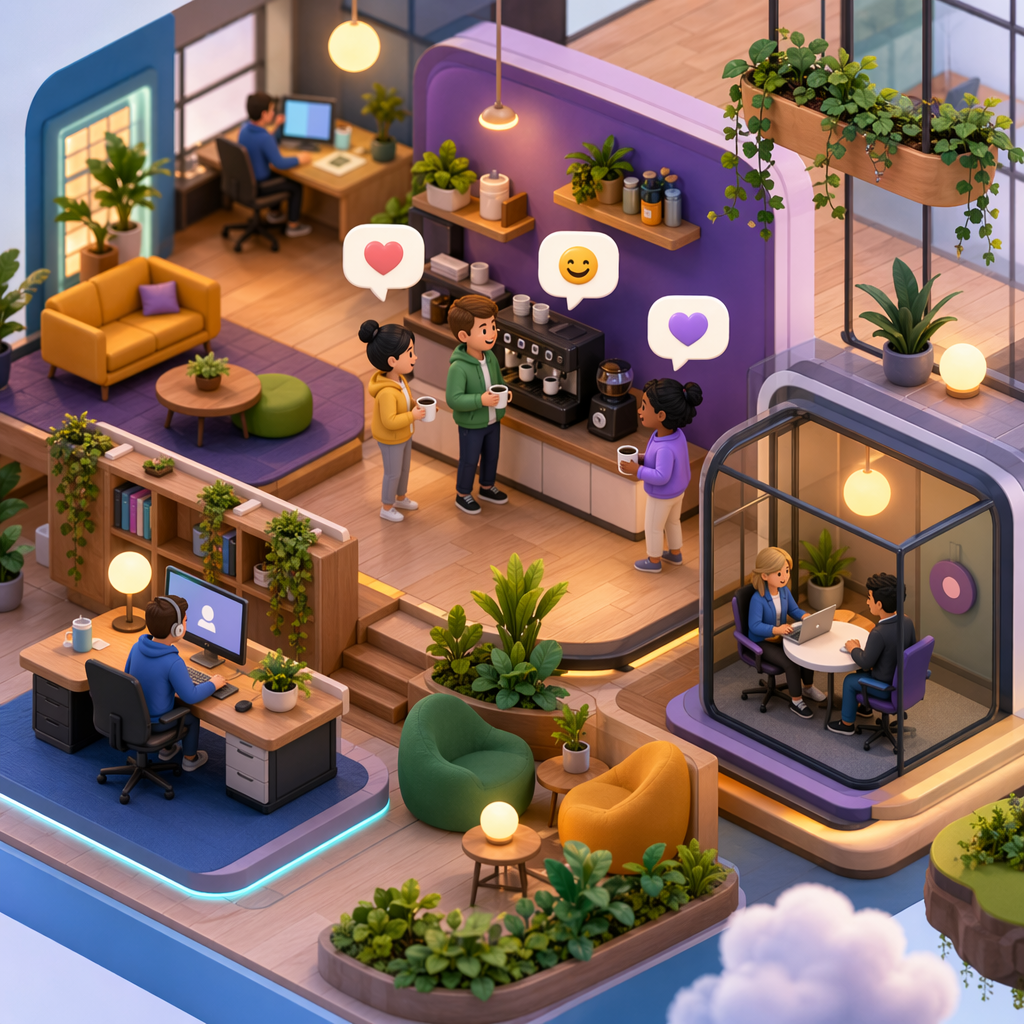
A standard setup within coworking spaces includes several distinct areas designed for different types of productivity. Open-plan desks cater to those who enjoy a communal vibe, while private booths or "phone boxes" are available for confidential calls. For teams that need to synchronize their efforts, Hurbly.ai complements these physical locations by providing a digital layer of presence, allowing remote members to see who is active in the office or working from another location in real-time.
The operational model of coworking spaces usually operates on a subscription or pay-per-use basis. This model covers all overhead costs, such as electricity, cleaning, and maintenance. Many coworking spaces also offer tiered memberships, which may include:
- Hot Desking: Access to any available seat in a common area.
- Dedicated Desks: A reserved spot that remains yours every day.
- Private Offices: Enclosed rooms within the larger facility for small teams.
- Virtual Office Services: Business mailing addresses and professional phone answering.
Why Modern Professionals Choose Shared Environments
The relevance of coworking spaces stems from the need to separate professional life from domestic life. Working from home can often lead to isolation or distractions; therefore, coworking spaces serve as a neutral ground that promotes a "work mode" mindset. This physical separation helps in maintaining a healthy work-life balance while ensuring that professional interactions remain high-quality and focused.
Furthermore, coworking spaces act as hubs for community and collaboration. Many facilities host workshops, networking events, and social hours to connect their members. In an era where digital tools like Hurbly.ai facilitate instant communication and presence tracking for distributed teams, the physical proximity found in coworking spaces adds a layer of human connection that strengthens professional relationships and sparks spontaneous innovation.
Comparing Traditional Offices and Coworking Spaces
| Feature | Traditional Office | Coworking Spaces |
|---|---|---|
| Lease Term | Long-term (3-5+ years) | Flexible (Monthly/Daily) |
| Setup Cost | High (Furniture, Tech, Decor) | Zero (Plug-and-play) |
| Maintenance | Handled by the tenant | Handled by the provider |
| Networking | Internal only | Diverse and cross-industry |
| Scalability | Difficult and expensive | Immediate and simple |
As shown in the table, coworking spaces offer a significant advantage in terms of agility. For a startup or a growing remote team, the ability to add five more desks in a month is a vital asset. When these teams use Hurbly.ai, they can bridge the gap between those physically present in coworking spaces and those working from different time zones, ensuring everyone remains visible and accessible.
The Role of Technology in Enhancing Physical Workspaces
In 2026, technology is deeply integrated into how we use coworking spaces. Smart building systems allow members to book meeting rooms via mobile apps, while IoT sensors track occupancy to optimize energy use. However, the most critical technology is that which maintains team cohesion. While coworking spaces provide the physical desk, platforms like Hurbly.ai provide the "digital desk," showing who is available for a quick chat or who is currently in a deep-focus session.
This hybrid approach ensures that the benefits of coworking spaces are not lost on remote participants. By seeing real-time status indicators, a team member in a London-based coworking hub can feel just as connected to a colleague in a New York facility. The integration of high-quality coworking spaces with real-time presence tools reduces the friction of coordination and eliminates the need for excessive, pre-scheduled video meetings.
Selecting the Right Environment for Your Team
Choosing between various coworking spaces requires evaluating several factors beyond just the location. Accessibility via public transport, the quality of the coffee, and the reliability of the internet are standard checks. However, the "vibe" or culture of the space is equally important. Some coworking spaces focus on tech startups, while others cater to creative freelancers or corporate satellite teams.
To maximize the utility of coworking spaces, teams should look for environments that support both deep work and social interaction. A well-designed space will have quiet zones where silence is enforced and social lounges where conversation is encouraged. When combined with the transparency offered by Hurbly.ai, these coworking spaces become powerful engines for productivity, allowing teams to operate with the speed of a startup and the structure of an established enterprise.

