A Comprehensive Guide to Mastering Design Process Steps for Modern Teams

In this article

A Comprehensive Guide to Mastering Design Process Steps for Modern Teams
In 2026, creating successful products requires more than just a good idea; it demands a structured methodology. Following clearly defined design process steps ensures that a team can move from a vague concept to a finished product that actually solves a problem. This systematic approach reduces risks, minimizes wasted resources, and ensures that the final output aligns with both business goals and user expectations.
A well-structured workflow provides a roadmap for creativity. Without these design process steps, projects often suffer from "scope creep," where the objectives become unclear and the timeline extends indefinitely. By breaking the project down into manageable phases, teams can maintain focus and ensure quality at every stage of development.
The Importance of a User-Centric Approach
At the heart of any effective project is a focus on the end-user. Incorporating user-centric design process steps helps creators understand the frustrations, needs, and behaviors of the people who will actually use the product. This phase involves deep research, including interviews and observation, to move beyond assumptions.
When teams prioritize the user, they avoid building features that no one wants. This stage of the design process steps is critical because it identifies the "why" behind the project. By gathering qualitative and quantitative data early on, the team can establish a foundation of empathy, which informs every decision made in the subsequent phases of development.
The Iterative Nature of Design Thinking
Design thinking is a non-linear methodology used to tackle complex problems. It is central to modern design process steps because it encourages teams to challenge assumptions and redefine problems. Unlike traditional linear models, design thinking allows for constant refinement based on new information discovered during the project.
This approach is highly iterative. If a team discovers a flaw during the testing phase, they can loop back to the ideation or prototyping stages. This flexibility is what makes these design process steps so powerful in 2026. It fosters an environment where failure is seen as a learning opportunity, leading to more innovative and resilient solutions.
A Detailed Breakdown of Design Process Steps
To successfully execute a project, teams typically follow five core phases. These design process steps provide a logical progression from discovery to delivery:
- Empathize and Research: The team gathers information about the target audience to understand their environment and challenges.
- Define the Problem: Professionals synthesize their research to create a clear problem statement that guides the rest of the project.
- Ideate Solutions: This is a creative phase where the team generates a wide range of potential solutions without judgment.
- Prototype: The most promising ideas are turned into scaled-down versions of the product to investigate the solutions generated in the previous stage.
- Test and Validate: The final of the primary design process steps involves putting the prototype in front of real users to see how it performs in the real world.
Enhancing Collaboration Through Workshops
Workshops are an excellent way to execute various design process steps in a collaborative environment. These sessions bring together stakeholders, designers, and developers to align on goals and brainstorm ideas. By using structured activities, teams can quickly move through the ideate and define phases of the project.
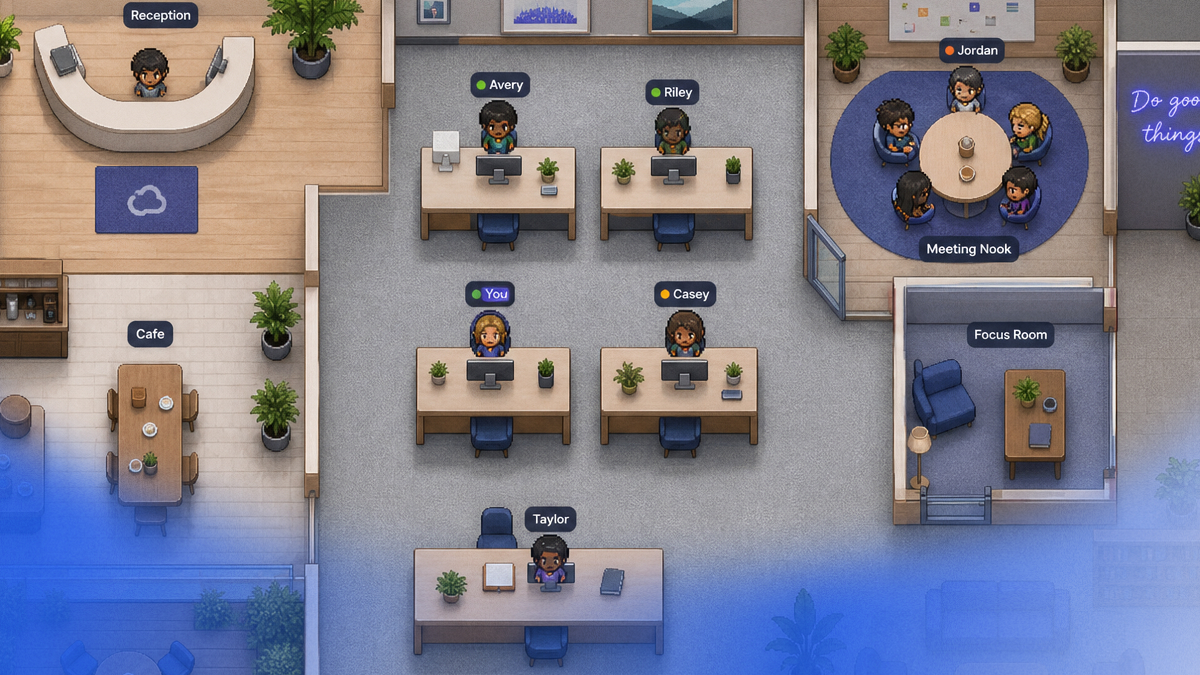
Effective workshops require clear communication and real-time interaction. As teams navigate these design process steps, staying connected is essential. Using a virtual office platform like Hurbly.ai helps remote teams maintain the spontaneous energy of an in-person workshop. It allows members to see who is available for a quick sync or a deep-dive session without the friction of scheduling formal meetings.
Adapting the Framework Across Different Industries
While the core principles remain the same, tailoring design process steps to specific industries is necessary for success. For instance, a software development team might focus heavily on rapid prototyping and frequent user testing cycles. In contrast, a physical product manufacturer might spend more time in the research and material testing phases.
Regardless of the industry, the goal of these design process steps is to create a repeatable framework for excellence. In 2026, flexibility is key. Organizations that can adapt their internal workflows to meet the specific technical and market demands of their sector will always have a competitive advantage over those using a rigid, one-size-fits-all approach.
Integrating Workflow Tools and Real-Time Communication
Managing complex design process steps requires the right set of tools. Project management software helps track progress, assign tasks, and store documentation. However, tools alone are not enough; the human element of presence and availability is what truly drives a project forward.
For distributed teams, maintaining a sense of presence is vital while working through intensive design process steps. Hurbly.ai provides a digital environment where team members can see each other's status in real-time. This transparency ensures that when a designer needs a quick opinion on a prototype, they can instantly see if a colleague is available to chat, replicating the fluid collaboration of a physical office.
Conclusion and Continuous Improvement
Mastering these design process steps is not a one-time event but a continuous journey of improvement. After a project is completed, successful teams conduct retrospectives to analyze what worked and what didn't. This feedback is then used to refine the process for the next project, ensuring that the team becomes more efficient over time.
By consistently applying these design process steps and utilizing modern communication platforms, teams can ensure they are building products that are not only functional but also deeply meaningful to their users. In the fast-paced market of 2026, this structured yet flexible approach is the most reliable path to long-term success.