How to Manage a Remote Team Across Different Time Zones (Without Losing Your Mind)

In this article

Picture this: it's 9 AM in New York, your engineer in Lisbon is wrapping up her afternoon and about to do the school run, your designer in Singapore just had dinner and is heading to his desk for an evening session, and your product manager in Chicago hasn't had coffee yet. You need a quick decision on a UX call that affects a feature going live in six hours.
Welcome to the time zone puzzle, one of the most consistently challenging aspects of managing a distributed team. And unlike most management challenges, this one doesn't really have a perfect solution. You're working with geography and physics. But it absolutely has good solutions, and teams that crack the code on async-first communication and smart overlap management often find that time zone distribution becomes a competitive advantage rather than just a headache.
The key insight most managers are slow to arrive at: a globally distributed team is not the same as a co-located team that happens to be on video calls. It requires a fundamentally different approach to communication, decision-making, and trust. Once you internalize that, everything else starts to make more sense.
Know Your Team's Coverage Map (And Be Honest About the Gaps)
The first step in managing across time zones is having a crystal-clear picture of your team's actual availability overlap. Not what you wish it were, what it actually is.
Make a simple visual: list every team member, their time zone, and their typical working hours in UTC. Then overlay them. Where do you have shared hours? Where are there gaps? Who has zero overlap with whom?
For many globally distributed teams, the honest answer is that some pairs of people share as few as one or two overlap hours per day, or none at all. That's not a problem you can schedule your way out of. It's a design constraint that requires structural adaptation.
Identify your critical overlap windows. These are the hours when the most people are simultaneously online. Even if that's just 2-3 hours, protect them fiercely for synchronous work that genuinely needs it: collaborative problem-solving, important decisions, relationship-building conversations.
Be explicit about "coverage" vs. "collaboration." Some work can be handed off across time zones like a relay race, one person finishes a piece, another picks it up. That's coverage. Other work needs real-time thinking together. That's collaboration. Know which is which, and staff accordingly.
Don't pretend everyone can make all meetings. If your team spans 12+ hours, there is no meeting time that works well for everyone. Acknowledge this openly and build your meeting structure around it rather than asking people in extreme time zones to always be the ones who make sacrifices.
Build an Async-First Communication Culture
The most effective thing you can do for a time-zone-distributed team is shift your default communication posture from synchronous to asynchronous. This means: assume the other person is not available right now, design your communications so they can be understood and acted on without a back-and-forth, and don't create urgency that doesn't exist.
Write like the person is offline. When you send a message, include everything they need to respond without a follow-up. Context, question, what you need, and by when. "Hey, can we talk about the design?" is not an async message. "Hey, the client came back with feedback on the homepage mockup (attached). The main issue is the CTA placement. Can you take a look and share your thinking by Thursday 5 PM your time? Happy to jump on a call if you want to talk it through after that." That's an async message.
Invest in written documentation. In async teams, the written record is everything. Meeting notes, decision logs, project briefs, status updates, these shouldn't be afterthoughts, they should be primary communication artifacts. A team that documents well can function across any time zone spread because information doesn't bottleneck in someone's head waiting for them to wake up.
Use video async when tone matters. Tools like Loom allow you to send a short video message that conveys tone and nuance that written text can't. "Quick Loom about the design feedback" lands differently than a Slack message and doesn't require scheduling a call. This is particularly valuable for feedback, explanations, and anything where you need the person to feel the message, not just read it.
Set explicit response time expectations by channel. Not everything needs an immediate response. Define it explicitly: Slack messages get a response within 4 business hours in your timezone; email is 24 hours; anything marked "urgent" in the subject or with a specific flag gets a response within 2 hours. This removes the anxiety of "should I be responding to this right now?" that can make remote workers feel like they need to be always-on.
Design Meetings That Respect Everyone's Time Zones
Even in an async-first world, synchronous meetings still happen. The question is how to do them with respect and equity for everyone on the team.
Rotate meeting times. If you have a standing weekly team meeting and it always happens at 9 AM EST (which might be 10 PM for someone in Singapore), you are implicitly communicating that some team members matter more than others. Rotate the meeting time across your team's time zones so everyone takes turns with the inconvenient slot.
Record and document every meeting. No exceptions. Someone who couldn't make a meeting because of time zones shouldn't be penalized by being out of the loop. A recording plus a written summary with decisions and action items ensures everyone has full context regardless of when they were online.
Protect "sacred hours" on both ends. Figure out the daily routine constraints across your team, school pickup times, prayer times, local rush hours, gym schedules, and try to schedule meetings that don't regularly clash with them. A meeting that forces someone to miss their kid's bedtime every week is a culture signal, whether you mean it to be or not.
Have a "no meeting" policy for significant chunks of the day. Deep work requires uninterrupted time. If your distributed team is constantly fragmented by meetings during their limited working hours, nobody gets the focus time they need. Designate certain hours as protected focus time where no meetings can be scheduled.
Consider asynchronous "meetings." For many types of discussions, status updates, brainstorming, decision reviews, a Loom video or a detailed Slack thread can replace a real-time meeting entirely. Before scheduling any meeting, ask: does this actually need to be synchronous? Often the honest answer is no.
Communication Norms That Keep Everyone in the Loop
When some team members always have better access to information and real-time conversation than others, because they happen to share time zones with leadership, it creates a two-tier team dynamic that is corrosive to culture and morale.
Default to public channels. Decisions, discussions, and project updates should happen in shared channels rather than direct messages wherever possible. This ensures that team members in different time zones can catch up on context when they come online, rather than finding out about important things through a secondhand summary.
Create a daily async standup practice. Instead of (or in addition to) a live standup, ask team members to post a brief daily update in a shared channel: what they worked on, what's next, any blockers. This creates a shared information flow that works across all time zones and gives every team member visibility into what's happening across the team.
"Working in public" culture. Encourage team members to share work-in-progress in shared channels rather than keeping everything in private drafts until it's polished. Comments like "just thinking through this architecture, any feedback welcome" give distributed teammates something to engage with during their working hours and keeps the collaborative energy flowing.
Overcommunicate decisions. When a decision is made, communicate it clearly and proactively to everyone affected, not just the people who were in the room (or call) when it was made. Build a habit of decision announcements and decision logs so nobody is ever surprised by something that happened "before they were online."
Managing Performance Across Time Zones
Traditional performance management assumes that managers have some visibility into how people are working, they see them at their desk, they observe their work patterns, they absorb signals throughout the day. Across time zones, that visibility is minimal. This can feel uncomfortable, but it's actually an opportunity to do performance management better.
Manage by outcomes, not activity. Define clear, measurable goals. Evaluate people on whether they hit them, not on whether they seemed to be working hard during the window you were online. This is fairer, more motivating, and also more accurate, busyness is not the same as productivity.
Create visibility without surveillance. The goal is shared awareness of work status, not monitoring. Project management tools, daily standups, and clear milestone-based check-ins create the visibility that enables good management without the toxicity of tracking who's online when.
Build in check-in rhythms that account for the gap. If you only share a few hours of overlap with a team member, your weekly one-on-one with them is even more important than it would be with a co-located colleague. That hour is one of your few real-time touchpoints. Make it count, not for status updates, but for genuine connection, feedback, and course-correction.
Be aware of "proximity bias." Research shows that leaders unconsciously favor people they interact with more frequently, which in a distributed team means people in the same or similar time zones. Be vigilant about this. Are people in the inconvenient time zone getting the same career development opportunities? The same visibility with leadership? The same chance to shine?
How Hurbly Helps Teams Work Across Time Zones
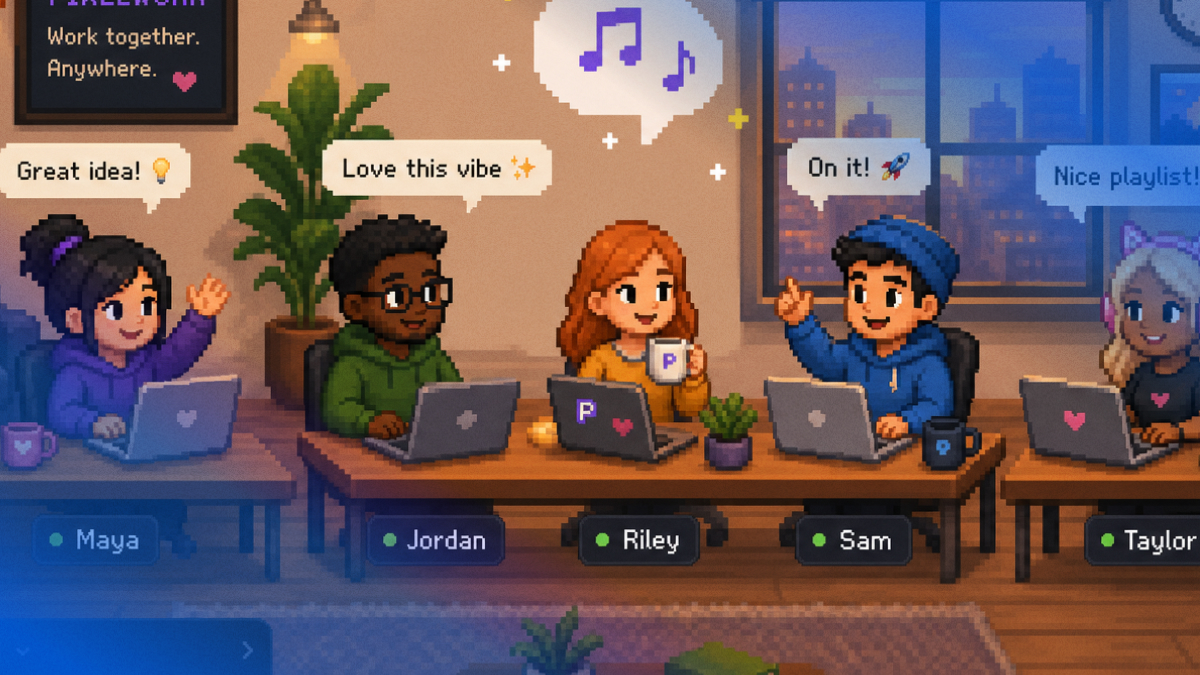
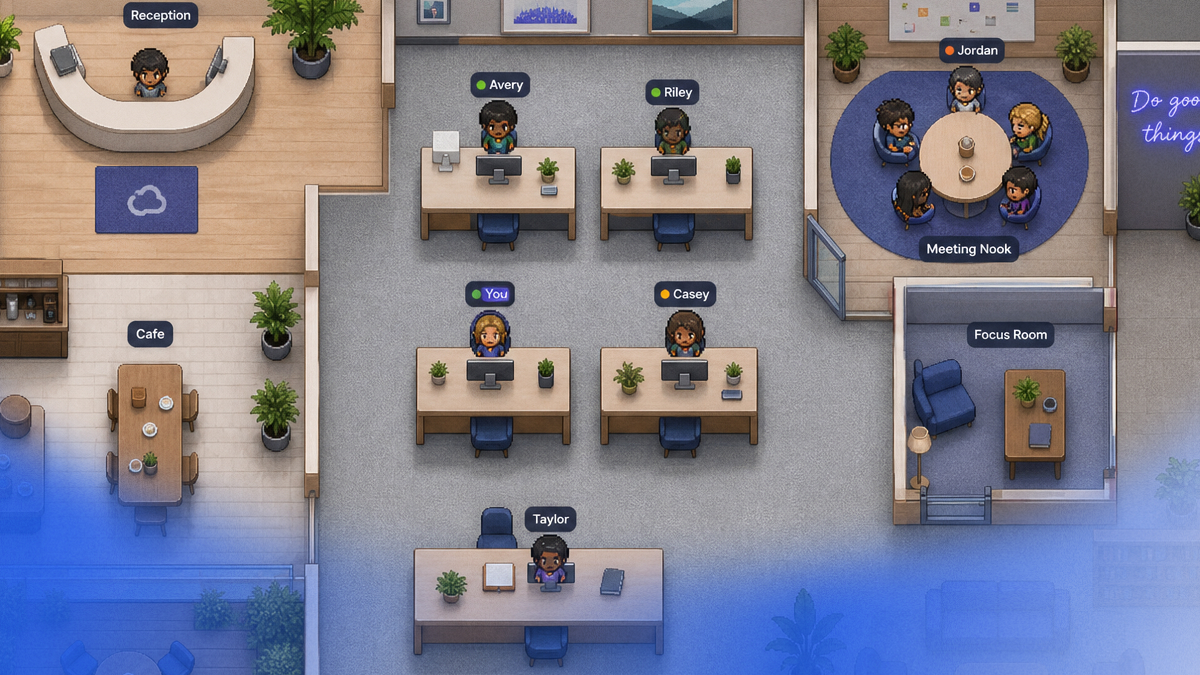
One of the side effects of time zone distribution is that people feel like they're working alone even when technically they're "on the team." Hurbly helps bridge this by making the team's virtual presence visible, you can see who's online in the virtual office, who's in a focus block, who's wrapping up their day.
For overlap hours, Hurbly makes spontaneous synchronous collaboration easy, no scheduling required, just pop into someone's virtual space. For non-overlap hours, the virtual office becomes a record of the team's rhythm even in their absence, creating a sense of continuity that purely async tools can't replicate.
When you're managing across time zones, the connective tissue of a shared team space matters. Hurbly provides that.
Try Hurbly free for 30 days and bring your distributed team a little closer together.
Frequently Asked Questions
Q: What's the maximum time zone spread a remote team can function across effectively?
A: There's no hard limit, but teams spanning more than 12 hours often need to accept that some pairs of people will have zero overlap and design their workflows accordingly. The key is being explicit about this and building strong async practices. Many successful teams span 24 time zones, it's about design, not limitation.
Q: How do we handle genuinely urgent situations when key people are offline?
A: Define an escalation protocol in advance. Who is empowered to make decisions in which person's absence? What constitutes a real emergency vs. something that can wait? Create a documented on-call rotation for truly time-sensitive situations. Most "urgent" situations are actually less urgent than they feel in the moment.
Q: Is it fair to require all-team meetings that require some people to join at unusual hours?
A: Occasional off-hours meetings are acceptable if they're reciprocated across the team. What's unfair is a pattern where the same people always take the inconvenient slots. If you have all-team meetings, rotate timing quarterly, record them without exception, and make the decision-relevant content available async for anyone who genuinely can't make it.
Q: Should we hire to minimize time zone spread, or is distribution actually beneficial?
A: Both can be true. Minimal time zone spread makes synchronous collaboration easier. But distribution can also mean 24-hour coverage, access to broader talent markets, and diverse perspectives. The right answer depends on your business model. If you need high collaboration, minimize spread. If you need coverage and global talent, distribute and invest heavily in async infrastructure.
Q: How do we handle holidays and local observances across different countries?
A: Build a shared team calendar with the major holidays for every team member's location. Establish a policy on how cross-timezone deadlines and meeting scheduling should account for local holidays. Acknowledge holidays from all represented cultures, not just US ones, in team communications. This is a small thing that signals significant respect.
Want your remote team to actually feel connected? Try Hurbly free for 30 days →