Effective Strategies for Managing Remote Teams in 2026

In this article

Effective Strategies for Managing Remote Teams in 2026
Managing remote teams requires a shift from traditional supervision to a results-oriented approach focused on transparency and communication. In a distributed work environment, the primary challenge is maintaining a cohesive culture while ensuring that every team member has the resources they need to succeed. Effective leadership in this context involves setting clear expectations, defining measurable goals, and utilizing tools that bridge the physical gap between employees. By prioritizing clarity, managers can reduce the ambiguity that often leads to burnout or misalignment in digital workspaces.
To succeed at managing remote teams, organizations must adopt a framework that values asynchronous communication alongside real-time interaction. This balance ensures that work continues across different time zones without requiring constant meetings. Documentation plays a critical role here; every process, decision, and project requirement should be recorded in a centralized location. This practice allows team members to find information independently, which is a cornerstone of managing remote teams efficiently and reducing dependency on immediate managerial feedback.
Enhancing Real-Time Collaboration and Presence
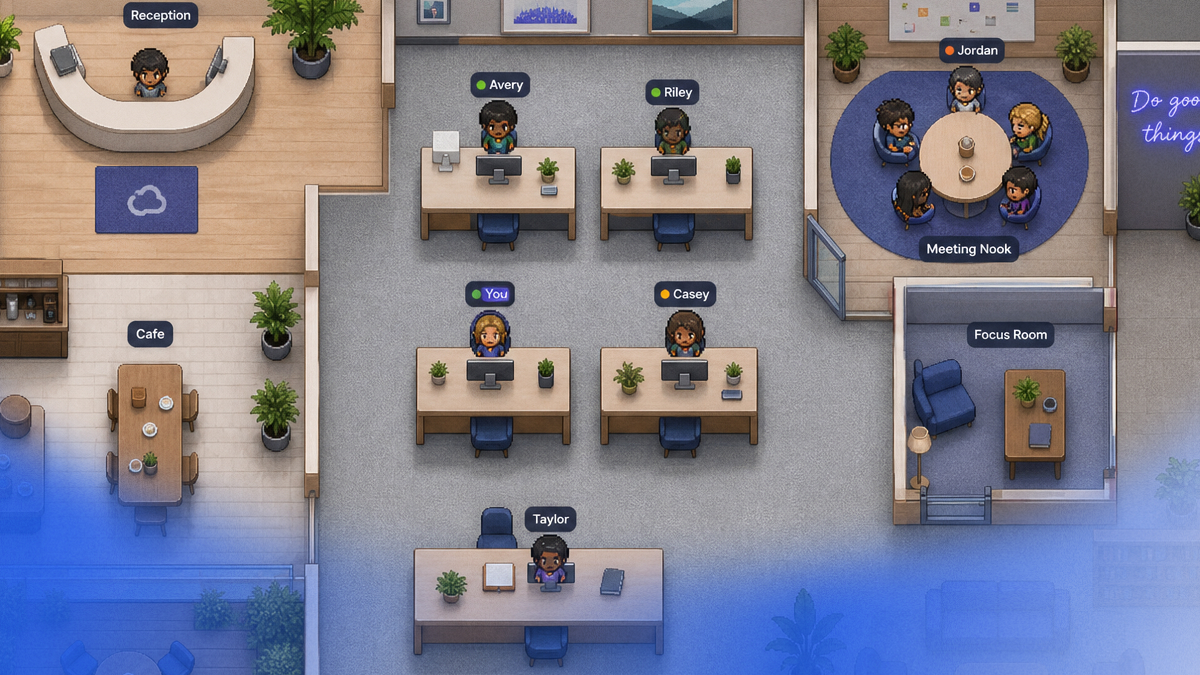
One of the biggest hurdles when managing remote teams is the loss of spontaneous interaction. In a physical office, you can see if a colleague is busy or available for a quick question. In a remote setting, this visibility is often lost, leading to "meeting fatigue" caused by over-scheduling. Using a virtual office platform like Hurbly.ai helps restore this presence. By showing who is focused, in a meeting, or available for a chat, it allows for natural interactions that mimic a physical workspace.
When managing remote teams, seeing real-time status indicators reduces the friction of coordination. Instead of sending a message and waiting hours for a reply, or scheduling a 30-minute call for a 2-minute question, leaders can engage with their staff at the right moment. This level of transparency is vital for managing remote teams because it builds trust and prevents the feeling of isolation. It enables a fluid workflow where team members feel connected to their peers regardless of their geographic location.
Essential Tools for Managing Remote Teams
The technology stack used by a company determines the success of managing remote teams. A well-structured stack should include tools for project management, instant communication, and presence tracking. These tools should integrate seamlessly to provide a holistic view of the team's progress and availability.
| Category | Function in Remote Management |
|---|---|
| Presence Tracking | Provides visibility into who is working and available, such as Hurbly.ai. |
| Asynchronous Tools | Allows for deep work by enabling communication that doesn't require an instant reply. |
| Project Management | Tracks tasks, deadlines, and responsibilities to ensure accountability. |
| Documentation | Serves as the "single source of truth" for all company policies and project data. |
Selecting the right software is only half the battle; the other half is establishing protocols for how these tools are used. For example, when managing remote teams, it is helpful to define which channels are for urgent issues and which are for casual conversation. This structure prevents information overload and helps employees maintain a healthy work-life balance by knowing when they can safely disconnect.
Building Trust and Accountability
Trust is the foundation of managing remote teams effectively. Without physical oversight, managers must trust that their employees are performing their duties. This trust is built through consistent delivery and transparent communication. Rather than monitoring hours spent at a desk, leaders should focus on output and milestones. This shift in perspective is a fundamental aspect of managing remote teams in the modern era, as it empowers employees to manage their own schedules while remaining accountable for their results.
To maintain accountability while managing remote teams, consider the following steps:
- Define Clear KPIs: Establish key performance indicators that are objective and easy to track.
- Regular Check-ins: Hold brief, purposeful one-on-one meetings to discuss roadblocks and career growth.
- Encourage Autonomy: Give team members the authority to make decisions within their scope of work.
- Promote Visibility: Use platforms like Hurbly.ai to ensure everyone knows what their colleagues are working on.
By following these steps, managing remote teams becomes less about control and more about support. When employees feel trusted, their engagement and productivity typically increase.
Overcoming Communication Barriers
Communication barriers are common when managing remote teams, often resulting from a lack of non-verbal cues or delayed responses. To mitigate this, leaders should encourage "over-communication." This doesn't mean more meetings, but rather more clarity in written and verbal exchanges. When managing remote teams, it is important to confirm that instructions have been understood and to provide context for every task assigned.
Furthermore, managing remote teams involves creating space for social interaction. Since there are no "water cooler" moments, leaders must intentionally facilitate informal chats. This can be done through dedicated chat channels or by using Hurbly.ai to start quick, spontaneous conversations. These interactions strengthen interpersonal bonds, which are essential for long-term retention and team morale. Ultimately, managing remote teams successfully requires a blend of the right technology, a culture of trust, and a commitment to clear, open communication.