Strategies to Manage and Prevent a Missed Meeting in Remote Work

In this article

Strategies to Manage and Prevent a Missed Meeting in Remote Work
A missed meeting occurs when a participant fails to attend a scheduled professional gathering without prior notice. In the context of 2026's remote work landscape, a missed meeting often results from technical glitches, calendar overlaps, or simple forgetfulness. When a team member experiences a missed meeting, it disrupts the flow of information and delays decision-making processes, creating a ripple effect that impacts project timelines and overall team productivity.
To address the challenges of a missed meeting, organizations must implement clear communication protocols. This involves setting expectations for attendance and establishing a standard procedure for when a missed meeting happens. For instance, if an individual realizes they have a missed meeting, they should immediately reach out to the organizer to explain the absence and request a summary of the discussed points. This proactive approach helps mitigate the negative consequences of the absence.
How Hurbly.ai Reduces the Frequency of a Missed Meeting
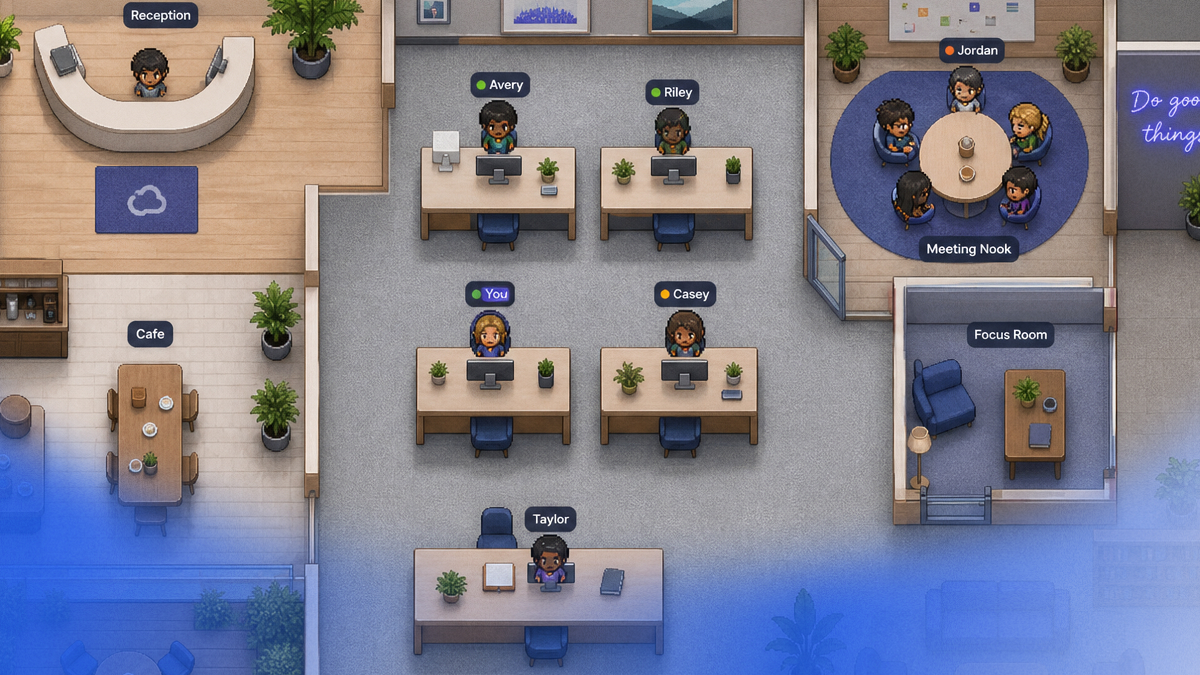
Hurbly.ai provides a virtual office environment that significantly lowers the chances of a missed meeting by offering real-time visibility into team activities. Unlike traditional static calendars, this platform shows who is currently available, focused, or already engaged in a conversation. By seeing a colleague's live status, team members can initiate spontaneous discussions, which often replaces the need for formal scheduling and reduces the likelihood of a missed meeting altogether.
The platform functions as a digital presence indicator, allowing users to see their coworkers in a shared virtual space. When a team uses Hurbly.ai, the transparency of knowing who is active prevents the confusion that leads to a missed meeting. If a user is "in a room" or "in deep work mode," others know not to expect them elsewhere, ensuring that every professional interaction is intentional and visible, thereby decreasing the rate of any unintentional missed meeting.
Technical and Behavioral Causes of a Missed Meeting
| Cause Category | Specific Reason | Impact on the Team |
|---|---|---|
| Technical | Notification failure or sync errors | Leads to a missed meeting due to lack of alerts. |
| Behavioral | Lack of calendar discipline | Results in a missed meeting because of poor planning. |
| Environmental | Connectivity issues or power outages | Causes an unavoidable missed meeting during remote work. |
| Organizational | Overlapping schedules | Frequent source of a missed meeting in busy agencies. |
Understanding these causes is essential for developing a strategy to avoid a missed meeting. Technical failures are often the most frustrating, as the participant may be ready to work but remains unaware of the start time. Behavioral causes, however, require a shift in company culture where the importance of attendance is emphasized to prevent the recurring issue of a missed meeting among specific team members.
Steps to Recover Information After a Missed Meeting
- Immediate Notification: As soon as you realize you have a missed meeting, notify the host via a direct message to apologize and explain the situation.
- Request Documentation: Ask for the meeting minutes or a recording of the session to ensure you do not lose critical project updates following the missed meeting.
- Review Action Items: Identify any tasks specifically assigned to you during the session to prevent further delays caused by the missed meeting.
- Schedule a Brief Sync: If the topic was complex, request a five-minute catch-up with a colleague to clarify points that might be misunderstood after a missed meeting.
- Update Your Status: Use tools like Hurbly.ai to signal your current availability so colleagues know you are back online and ready to catch up.
Improving Team Presence to Avoid Future Missed Meetings
Creating a culture of presence is the most effective way to eliminate the frustration of a missed meeting. When teams use Hurbly.ai, the boundary between "available" and "busy" is clearly defined through visual cues. This real-time data allows managers to see if a team member is overwhelmed, which might be the underlying reason for a recent missed meeting. By monitoring these patterns, leadership can adjust workloads and improve the health of the digital workplace.
Furthermore, integrating presence-based tools ensures that communication is fluid. Instead of relying on a rigid calendar that often leads to a missed meeting when notifications fail, teams can rely on seeing their peers "at their desks" virtually. This visibility fosters accountability and makes it much harder for a missed meeting to occur unnoticed, as the absence of a key participant is immediately visible to everyone in the virtual office space.