Implementing an Effective OKR Culture for Remote Teams in 2026

In this article

Implementing an Effective OKR Culture for Remote Teams in 2026
The adoption of an OKR culture (Objectives and Key Results) has become the standard for high-performing distributed teams. This framework focuses on aligning individual efforts with company-wide goals, ensuring every team member understands their impact. In a digital workspace, establishing a strong OKR culture requires more than just setting targets; it demands transparency and real-time visibility into how daily activities contribute to larger milestones. By prioritizing measurable outcomes over mere output, organizations can maintain high levels of engagement and accountability across different time zones.
Building a sustainable OKR culture involves defining ambitious objectives and pairing them with quantifiable key results. This method allows teams to track progress objectively, reducing ambiguity in performance evaluations. For remote organizations, the success of an OKR culture depends heavily on communication tools that bridge the gap between isolated tasks and collective achievements. When team members can see the immediate status of their peers, it becomes easier to synchronize efforts toward these shared goals.
Enhancing Transparency within an OKR Culture
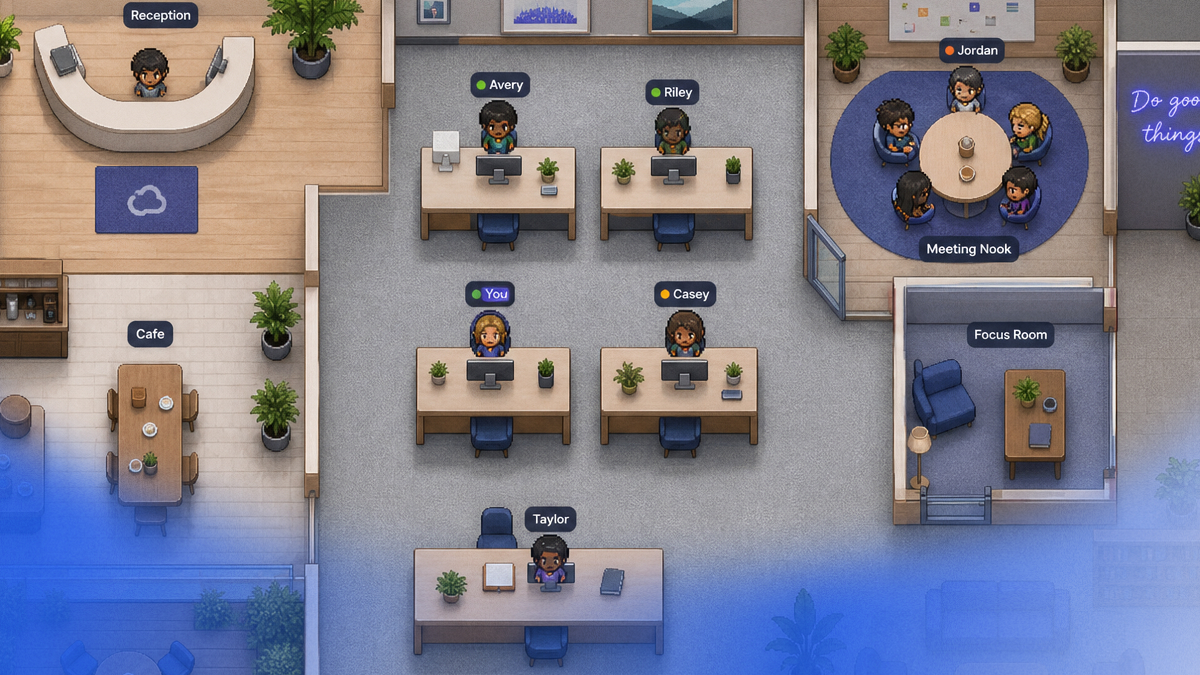
Transparency is the cornerstone of any successful OKR culture. Without a clear view of what colleagues are working on, alignment becomes difficult to maintain. Tools like Hurbly.ai support this environment by providing a virtual office space where team presence is visible in real-time. By seeing who is focused, available, or in a meeting, employees can better time their interactions, which strengthens the collaborative aspect of an OKR culture. This visibility prevents silos and ensures that everyone remains focused on the key results that matter most.
In 2026, the integration of presence indicators into the daily workflow has proven essential for maintaining the momentum of an OKR culture. When a team can visualize their collective presence, the psychological distance of remote work decreases. This sense of "working together" even while apart is a vital component of a healthy OKR culture, as it fosters the spontaneous communication necessary for problem-solving and rapid goal adjustment.
Practical Steps to Establish an OKR Culture
Transitioning to a results-oriented framework requires a structured approach. To effectively implement an OKR culture, organizations should follow these specific steps:
- Define Top-Level Objectives: Leadership must set three to five high-level goals for the quarter that are qualitative and inspiring.
- Develop Nested Key Results: Each department creates specific, time-bound metrics that directly support the top-level objectives.
- Ensure Tool Alignment: Utilize platforms like Hurbly.ai to maintain team connectivity, ensuring that the communication flow supports the OKR culture.
- Weekly Check-ins: Teams should review progress toward key results weekly to identify blockers early.
- Iterate and Grade: At the end of the cycle, reflect on what was achieved and adjust the next set of goals to refine the OKR culture.
| Feature of OKR Culture | Impact on Remote Teams | Role of Real-Time Presence |
|---|---|---|
| Clear Alignment | Eliminates redundant work | Shows who is working on related tasks |
| Measurable Results | Provides objective feedback | Reduces the need for micromanagement |
| Focus on Impact | Increases employee motivation | Encourages deep work sessions |
| Transparency | Builds trust across the org | Facilitates instant, goal-oriented chat |
Overcoming Challenges in a Distributed OKR Culture
One of the primary challenges in maintaining an OKR culture remotely is the risk of "out of sight, out of mind." When team members feel disconnected, their commitment to shared objectives may wane. To counter this, a robust OKR culture leverages technology to replicate the social cues of a physical office. By using Hurbly.ai, teams can see status updates and availability instantly, which mimics the natural oversight found in traditional settings without the intrusiveness of constant video calls.
Furthermore, a thriving OKR culture encourages autonomy. When the key results are clearly defined, managers do not need to monitor every hour of a subordinate's day. Instead, they can rely on the visibility provided by their virtual office to know that the team is active and engaged. This balance of autonomy and visibility is what allows an OKR culture to flourish in modern, flexible work environments, leading to higher retention and better overall performance.
The Future of Work and OKR Culture Integration
As we move through 2026, the synergy between goal-setting frameworks and presence-aware technology continues to evolve. An OKR culture is no longer just a management preference but a necessity for navigating the complexities of global collaboration. By integrating tools like Hurbly.ai, companies ensure that the human element of work—presence and availability—remains at the heart of their OKR culture.
Ultimately, the goal of an OKR culture is to create a high-trust environment where data drives decisions and people feel connected to the mission. By focusing on clear communication, real-time presence, and measurable outcomes, any organization can build a resilient and productive team. Continuous investment in the tools and habits that support an OKR culture will remain the most effective strategy for long-term success in the digital age.