Strategic Approaches to Modern Performance Management

In this article

Strategic Approaches to Modern Performance Management
Effective performance management is a structured process used by organizations to align individual employee goals with broader business objectives. In 2026, this practice has evolved beyond simple annual reviews into a continuous cycle of feedback and data-driven decision-making. By implementing a robust performance management framework, companies can identify skill gaps, recognize high achievers, and ensure that every team member understands their specific contribution to the company’s success. This systematic approach relies on clear communication and measurable metrics to track progress over time.
The core of performance management involves setting specific, measurable, achievable, relevant, and time-bound (SMART) goals. When employees have a clear roadmap, they are more likely to remain engaged and productive. Furthermore, performance management serves as a critical tool for talent development, allowing managers to provide targeted coaching and resources that help employees grow within their roles. This continuous improvement cycle not only benefits the individual but also strengthens the organization's competitive position in the market.
The Role of Real-Time Visibility in Team Productivity
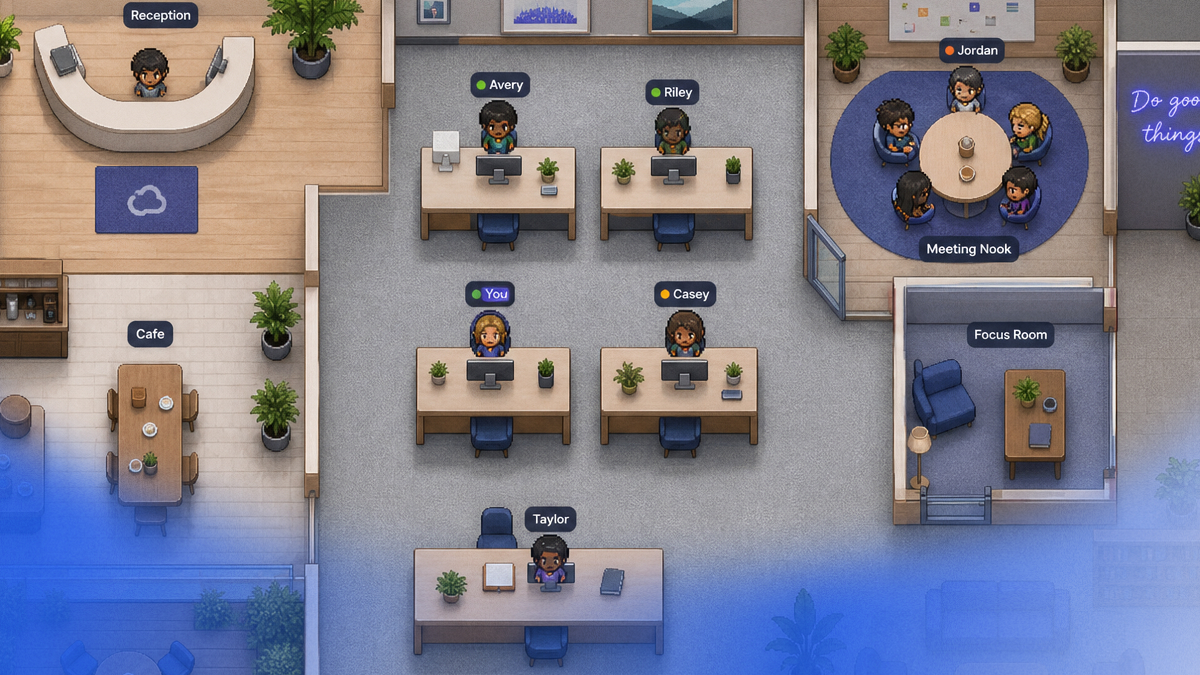
In the current landscape of remote and distributed work, maintaining high standards of performance management requires visibility into how teams interact. Traditional methods often fail to capture the nuances of daily collaboration. Tools like Hurbly.ai address this by providing a virtual office environment where team presence is visible in real time. When managers can see who is focused, available, or in a meeting, they can better support performance management by reducing unnecessary interruptions and fostering spontaneous, high-value interactions.
Real-time presence indicators help bridge the gap created by physical distance. By replicating the atmosphere of a physical office, teams can maintain a sense of connection that is often lost in purely asynchronous communication. This visibility is a vital component of performance management because it allows for immediate feedback and quick course corrections, preventing minor issues from escalating into significant blockers. Understanding team dynamics through presence data enables a more nuanced approach to evaluating how work actually gets done.
Key Components of a Performance Management System
A comprehensive performance management strategy is built on several interconnected pillars. These components ensure that the evaluation process is fair, transparent, and focused on long-term growth.
- Goal Alignment: Ensuring that individual tasks directly support the department's and the company's strategic priorities.
- Continuous Feedback: Moving away from yearly check-ins toward weekly or bi-weekly conversations that keep performance management relevant.
- Data Collection: Utilizing objective data points, such as project completion rates and quality scores, to inform evaluations.
- Professional Development: Identifying opportunities for training and mentorship as a core output of the performance management process.
- Recognition and Rewards: Implementing a system that acknowledges excellence to maintain high levels of motivation.
| Feature | Traditional Approach | Modern Performance Management |
|---|---|---|
| Frequency | Annual or Bi-annual | Continuous and Real-time |
| Goal Setting | Top-down mandates | Collaborative and flexible |
| Primary Focus | Past mistakes and ratings | Future growth and development |
| Communication | Formal, scheduled meetings | Spontaneous and ongoing |
Enhancing Performance Management Through Digital Presence
The integration of virtual office technology into performance management workflows allows for more organic collaboration. When team members can see their colleagues' status via Hurbly.ai, they can initiate instant conversations without the friction of scheduling formal video calls. This fluidity is essential for maintaining momentum in fast-paced projects. In this context, performance management becomes less about monitoring hours worked and more about optimizing the environment for successful outcomes and efficient communication.
By reducing the reliance on heavy messaging threads and back-to-back meetings, organizations can protect their employees' "deep work" time. A well-structured performance management plan recognizes that constant availability is not the same as high performance. Instead, it encourages a balance between focused individual tasks and collaborative sessions. This balance is easier to achieve when the digital workspace provides clear signals regarding availability, helping managers refine their performance management tactics based on actual work patterns.
Implementing a Performance Management Framework
To successfully implement a performance management framework, organizations should follow a logical sequence of steps. This ensures that the transition to a more data-driven and transparent culture is smooth and well-received by the workforce.
- Define Objectives: Clearly state what the organization hopes to achieve through its performance management initiatives.
- Select Tools: Choose platforms that support both the tracking of goals and the daily facilitation of team presence and communication.
- Train Managers: Ensure leadership understands how to provide constructive feedback and how to use performance management data ethically.
- Establish Baselines: Record current productivity levels to measure the impact of new performance management strategies over time.
- Iterate and Refine: Regularly review the performance management process itself to ensure it remains effective and aligned with the evolving needs of the team.
Consistent application of these steps leads to a more resilient organization. When performance management is treated as a foundational element of the corporate culture rather than a bureaucratic requirement, it fosters an environment of accountability and mutual respect. Ultimately, the goal of performance management is to create a workplace where every individual has the tools and the clarity needed to perform at their highest potential.