Effective Strategies for Remote Onboarding in 2026
In this article

Effective Strategies for Remote Onboarding in 2026
Effective remote onboarding is the foundation of a successful distributed team. It is the structured process of integrating new employees into a company’s culture, workflows, and technical systems without a physical office presence. In 2026, this process has evolved beyond simple video calls to include immersive digital environments that foster immediate connection. A well-executed remote onboarding strategy ensures that new hires feel supported, informed, and productive from their very first day, regardless of their physical location.
The primary goal of remote onboarding is to reduce the "time-to-productivity" while building social capital. When a new team member joins a distributed organization, they often face challenges such as isolation or information silos. By utilizing a clear roadmap and digital presence tools like Hurbly.ai, companies can simulate the natural interactions of a physical workspace. This visibility helps the newcomer understand team dynamics and availability, making the transition into the new role much smoother and more intuitive.
Key Components of a Successful Remote Onboarding Process
A comprehensive remote onboarding program is built on three main pillars: administrative readiness, cultural integration, and technical training. Administrative readiness involves ensuring all legal documents, hardware, and software access are prepared before the start date. Cultural integration focuses on connecting the hire with the company’s values and mission through virtual meetups. Technical training provides the specific knowledge required to perform job tasks using the company’s internal stack and communication protocols.
To maximize the impact of remote onboarding, organizations should focus on the following elements:
- Pre-boarding Communication: Send a welcome package and a clear schedule at least one week before the start date to reduce first-day anxiety.
- Documentation Hub: Maintain a centralized, searchable knowledge base where new hires can find answers to common questions without waiting for a sync meeting.
- Presence-Based Integration: Use tools that show real-time availability to help new hires know when it is appropriate to ask a quick question.
- Feedback Loops: Schedule regular check-ins during the first 30, 60, and 90 days to identify and resolve any friction points in the remote onboarding experience.
Enhancing Social Connection During Remote Onboarding
One of the biggest hurdles in remote onboarding is the lack of spontaneous "watercooler" conversations. In a traditional office, a new hire learns a lot by simply observing and overhearing colleagues. In a digital setting, these interactions must be intentionally designed. Implementing a "buddy system" is a highly effective tactic; pairing a new hire with an experienced peer provides a safe space for informal questions and helps navigate the unwritten rules of the organization.
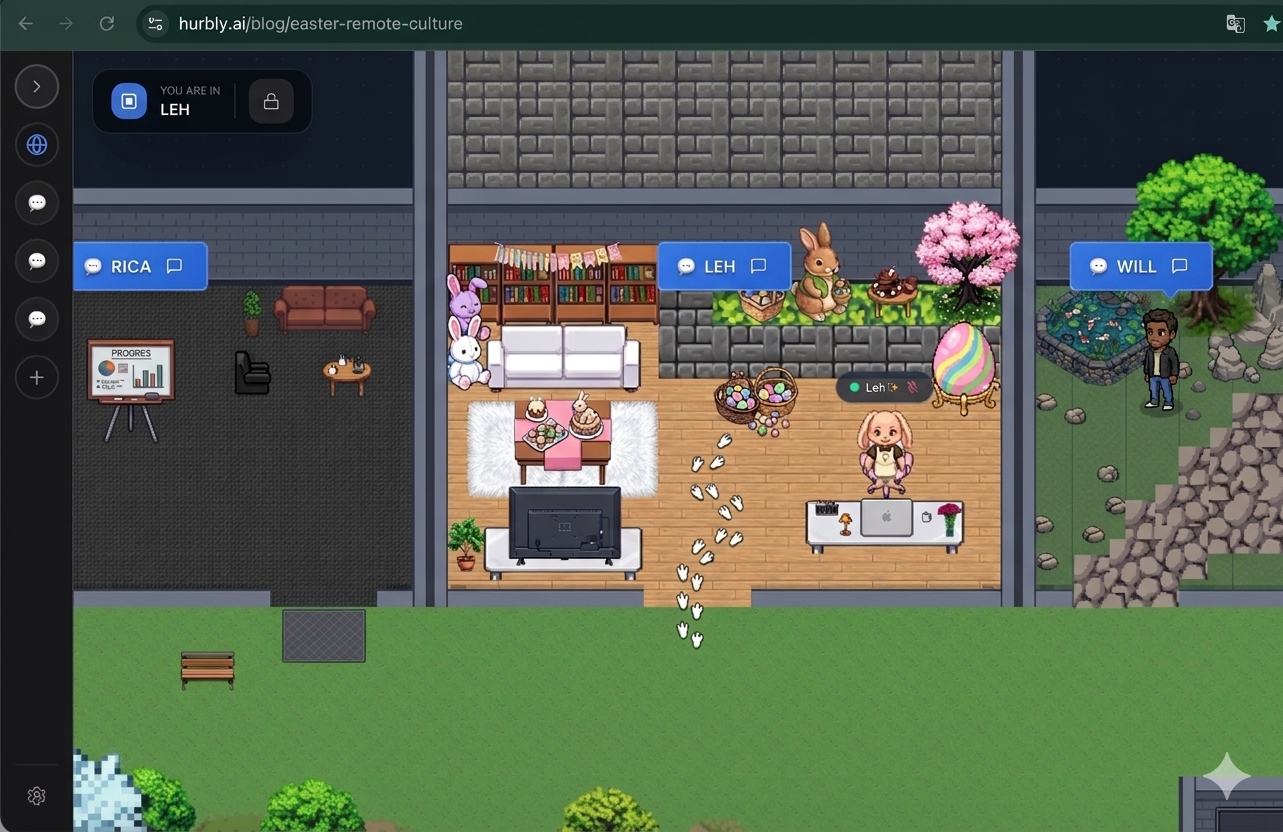
Furthermore, leveraging technology to visualize the office environment can significantly improve remote onboarding. When a new employee can see who is at their desk, who is in a deep-focus mode, or who is free for a quick chat through Hurbly.ai, they feel less like they are working in a vacuum. This real-time visibility replicates the social cues of a physical office, allowing for natural introductions and helping the new hire feel like a true part of the team rather than just a name on a messaging app.
Comparison of Onboarding Approaches
The following table compares traditional in-person methods with modern remote onboarding techniques to highlight how digital strategies have adapted to meet the needs of 2026.
| Feature | In-Person Onboarding | Modern Remote Onboarding |
|---|---|---|
| Initial Orientation | Physical meeting room presentations. | Interactive digital modules and live video sessions. |
| Social Integration | Office tours and team lunches. | Virtual presence platforms and "buddy" systems. |
| Learning Pace | Fixed schedule dictated by trainers. | Self-paced learning supported by a documentation hub. |
| Spontaneous Support | Tapping a neighbor on the shoulder. | Real-time status indicators for instant outreach. |
| Equipment Setup | IT department sets up the desk. | Pre-configured hardware shipped to the employee. |
This shift toward a more digital-first remote onboarding model allows for greater flexibility and ensures that every employee receives a consistent experience, regardless of their time zone or geographic region.
Best Practices for Long-Term Remote Onboarding Success
Successful remote onboarding does not end after the first week; it is a continuous process that can last several months. To ensure long-term retention, managers must prioritize clarity in goal setting. New hires should have a clear understanding of what "success" looks like in their specific role. Providing a 90-day roadmap with incremental milestones helps the employee track their own progress and stay motivated as they navigate the complexities of a new remote environment.
Finally, the technical environment plays a crucial role in sustaining the momentum gained during remote onboarding. By integrating tools like Hurbly.ai, companies provide a persistent virtual space where the team "lives" during work hours. This reduces the friction of scheduling formal meetings for simple clarifications. When remote onboarding includes training on how to use presence indicators and instant conversation features, it empowers the new hire to take initiative and build professional relationships more rapidly, leading to a more engaged and cohesive workforce.

