How to Stay Visible While Working Remotely (Without Being Always-On)

In this article

There's a version of remote work visibility that nobody actually wants: sending messages at 11pm to prove you're still working, joining every optional meeting, or making your camera the last to turn off on every call. That version of visibility is just anxiety with a productivity label on it.
But there's also a real problem underneath it. Remote workers especially those newer to the team or earlier in their careers genuinely are less visible than their in-office counterparts. Studies on remote work consistently show that remote employees are promoted less frequently and feel less connected to leadership, not because they're doing less work, but because the work is less visible.
This is a systems problem, not a personal failing. And it has practical solutions that don't require you to be always-on.
Why Visibility Matters More Than You Think
When you're in an office, visibility is partly ambient. People see you working. They notice when you stay late. They overhear you problem-solving. They watch you handle a difficult conversation gracefully. None of that is strategic it just happens as a byproduct of being in the same physical space.
Remote work removes the ambient layer. What's left is intentional visibility the things you actively do to make your work and your presence known. Without it, good work gets done and nobody outside your immediate team knows it happened.
This isn't about self-promotion for its own sake. It's about making sure the quality of your work matches how it's perceived by the people who make decisions about your career.
1. Make Your Work Visible Before Someone Has to Ask
The single most effective thing you can do for remote visibility is give people regular, brief updates on what you're working on and what's been completed before they have to check in with you.
This doesn't have to be a formal status report. A two-sentence Slack message on Friday afternoon ("Shipped the integration this week, next up is the onboarding flow") accomplishes the same thing with almost no effort.
The key is that the update is proactive. Waiting to be asked signals that your work exists on its own schedule. Proactively sharing signals that you're managing your work with awareness of how it connects to the broader team.
2. Be Consistently Present During Core Hours
Visibility is partly about output, but it's also about presence. In a remote environment, presence means being reliably reachable and engaged during the hours your team considers core.
This doesn't mean being available 24/7. It means that when someone sends a message during work hours, they don't wait three hours to find out if you're working. It means showing up to meetings on time. It means your status reflects reality not "available" when you're in a meeting and not "away" when you're at your desk.
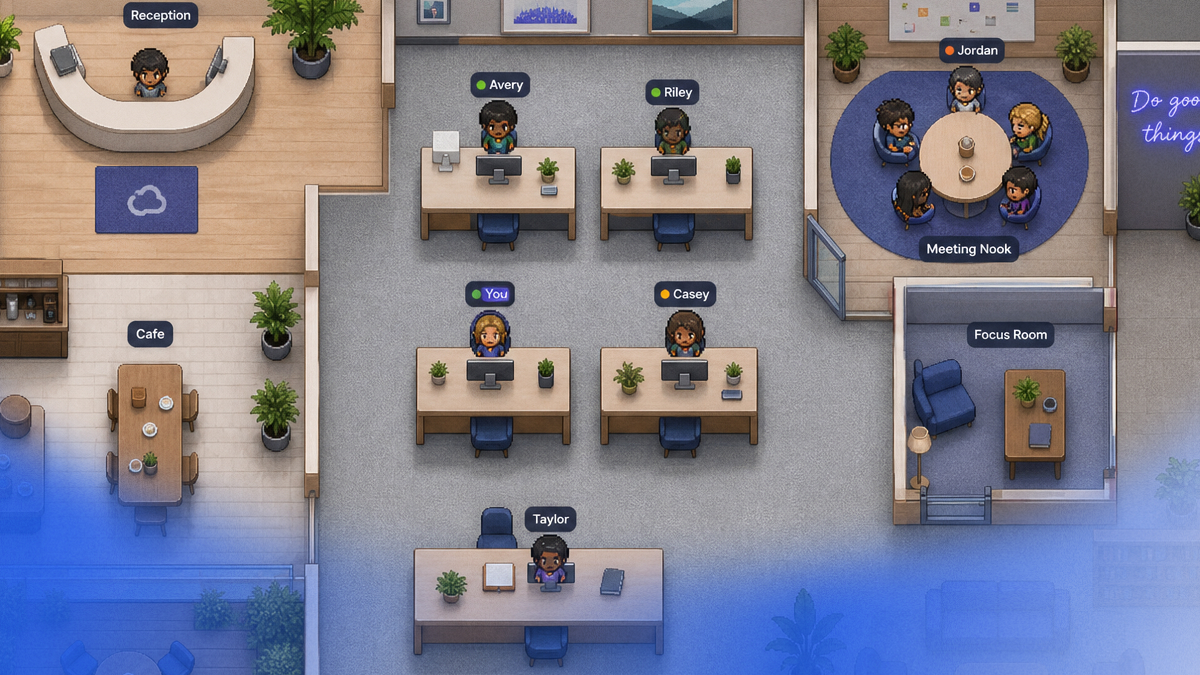
Hurbly's virtual office makes this natural rather than forced. When you're in the virtual office, your team can see that you're there, just like they could see your desk in a physical office. You don't have to announce your presence it's ambient.
3. Contribute Visibly in Team Channels
Remote work tends to push communication into DMs and small group threads. This is efficient for getting things done, but it's invisible to everyone outside those threads.
Contribute regularly in shared team channels, not just DMs. Share something useful an article relevant to a project, a solution to a problem you just solved, a question that others might also have. Comment on other people's shares. React to updates.
This isn't about volume. Two or three thoughtful contributions per week in shared channels is more valuable for visibility than fifty messages in private threads.
4. Ask for Specific Feedback and Make It Easy to Give
One of the quietest visibility problems in remote work is the absence of informal feedback. In an office, someone might lean over and say "that presentation was really strong" after a meeting. That loop doesn't exist by default when everyone goes back to separate windows.
Ask for specific feedback proactively. After a deliverable: "I'd love to know what landed well and what I could sharpen next time ten minutes to share thoughts?" After a presentation: "Any feedback on the structure or how I handled the Q&A?"
This serves two purposes. You get the feedback you need. And the person giving feedback pays more attention to your work than they would have otherwise.
5. Have Regular One-on-Ones With Your Manager
In a remote environment, the one-on-one with your manager is the most direct visibility channel available to you. Use it for more than status updates.
Bring one thing you're proud of each week not to brag, but to create the habit of making your wins visible. Bring one question about priorities or direction. Bring one thing you're thinking about for your own development.
Managers of remote teams often have poor visibility into what their team members actually accomplished in a given week. Helping your manager see your work clearly is a professional skill, not a political one.
6. Connect Cross-Functionally
Your visibility within your immediate team is probably fine. The bigger visibility gap for most remote workers is cross-functional the people outside your direct team who make decisions that affect your career.
Look for natural opportunities to connect across teams. Volunteer for cross-functional projects. Ask questions in all-hands channels that show you're engaged with the broader company. Introduce yourself to counterparts you work adjacent to but haven't actually met.
One meaningful connection outside your immediate team per month compounds significantly over a year.
7. Document Your Work in Shared Places
When you solve a problem, write it down somewhere the team can see it. When you finish a project, post a brief summary with what you learned. When you build a process, document it even if nobody asked.
Documentation is visibility that scales. Every person who reads what you've written is a visibility touchpoint that required no additional effort from you.
8. Take Up the Right Kind of Space in Meetings
Remote meetings tend toward two failure modes: everyone talks and nothing gets decided, or the loudest person in the room dominates while everyone else goes on mute.
Neither is good for visibility. The goal is to make contributions that are specific, useful, and memorable.
Before the meeting, prepare one point you want to make or one question you want to ask. Make it early in the meeting rather than late contributions that happen in the last five minutes are often forgotten. If you disagree with something, say so constructively rather than staying quiet.
Being the person who asks the question everyone was thinking, or who names the tension that nobody was willing to surface, creates more visibility than talking for ten minutes about something tangential.
The Problem With "Always-On" as a Visibility Strategy
Always-on visibility is a short-term strategy with long-term costs. If your strategy for being visible is to respond immediately at all hours, always be the first to comment on things, and never be unreachable, you will create visibility but you'll also create the expectation that this is your normal operating mode.
When you eventually need to step back, protect focused work time, or take a vacation, the absence will be conspicuous in a way it wouldn't be for someone whose visibility wasn't built on constant availability.
Sustainable visibility is built on consistency, quality, and genuine presence during reasonable hours. It compounds over time without burning you out.
How Hurbly Helps With Remote Visibility
Most remote visibility problems are symptoms of a deeper issue: remote teams lack a shared space where presence is natural and continuous. Everyone is isolated in their own window, and connection only happens in scheduled meetings.
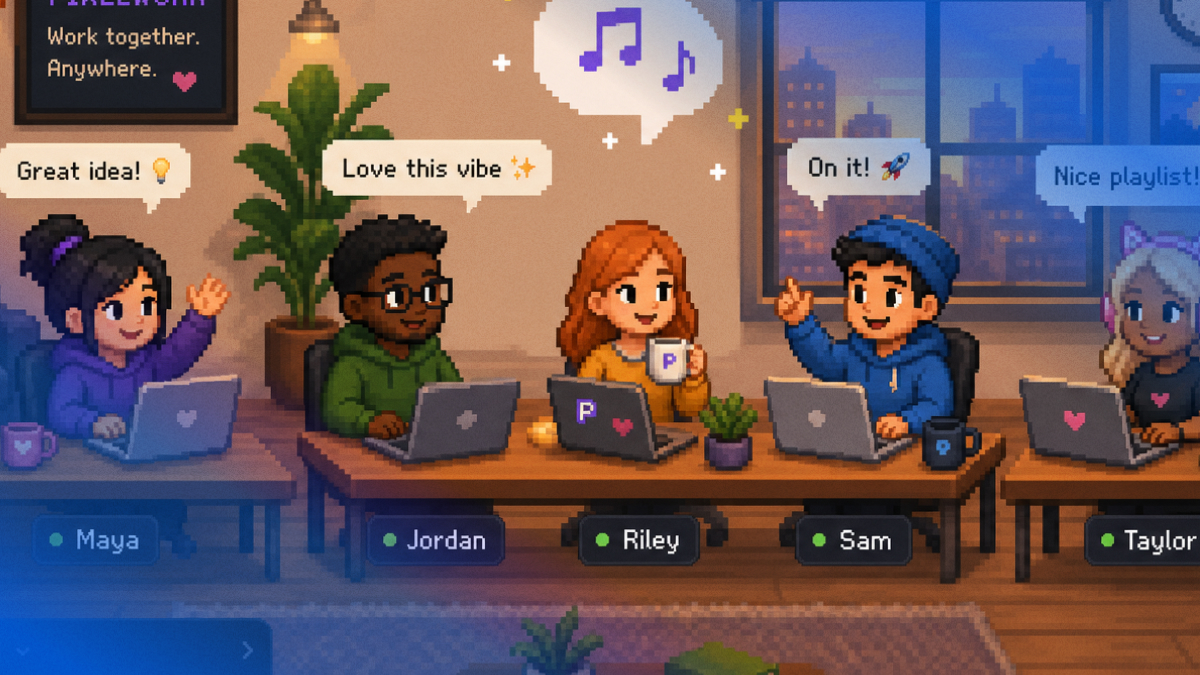
Hurbly creates a persistent virtual office where your team can see who's around, drop in for a quick conversation, and feel the ambient presence that makes a team feel like a team rather than a collection of individuals who happen to share a Slack workspace.
When visibility is built into the environment rather than requiring constant deliberate effort, remote workers can focus on doing excellent work and letting that work be seen without performing availability they don't actually have.
FAQ
Is it normal to feel invisible working remotely?
Very. Studies consistently show that remote workers feel less recognized than in-office counterparts, even when their output is equivalent. This is a structural problem with how most remote work is organized, not a reflection of the quality of your work.
How much self-promotion is too much?
The line is between sharing your work (fine, expected, necessary) and taking credit for others' work or exaggerating your contributions (not fine). Proactively updating your manager and team on what you've delivered is not self-promotion it's professional communication.
My manager is remote too. Does visibility still matter?
Yes, and in some ways more. When your manager can't see you working, they rely almost entirely on what you communicate about your work. The proactive update habits described above matter even more when your manager is also remote.
How do I stay visible without bothering people with too many messages?
Prioritize quality over volume. Two meaningful contributions to shared channels per week is more valuable than twenty low-quality messages. Ask yourself before posting: does this add something useful, or am I just making noise?
Does working in a virtual office like Hurbly really help with visibility?
The research on presence and visibility in remote work suggests that ambient awareness knowing your colleagues are around and available significantly improves both connection and the sense of being seen. Virtual offices that simulate this ambient presence address the root cause of remote visibility problems rather than just managing the symptoms.
Visibility in remote work is a skill. Like most skills, it gets easier with practice and becomes more natural over time. Start with one habit from this list probably the proactive update and add from there.
See how Hurbly makes remote presence ambient and natural without more meetings