Effective Methods to Track Employee Hours in Remote Work Environments

In this article

Effective Methods to Track Employee Hours in Remote Work Environments
Managing a distributed workforce in 2026 requires precise systems to monitor productivity and attendance. To track employee hours effectively, companies must move beyond manual spreadsheets and adopt digital solutions that capture real-time data. These systems provide a clear record of when work begins and ends, allowing managers to calculate payroll accurately and assess project timelines. When organizations track employee hours, they gain insights into labor costs and can identify which tasks consume the most resources, leading to better budget allocation.
Modern digital tools offer various ways to track employee hours, including automated timers, GPS-based check-ins for field workers, and desktop applications that log active work sessions. For remote teams, the ability to track employee hours helps maintain accountability without the need for constant micro-management. By establishing a transparent process to track employee hours, businesses ensure that every team member is compensated fairly for their contributions while maintaining compliance with local labor regulations.
Enhancing Team Presence and Real-Time Collaboration
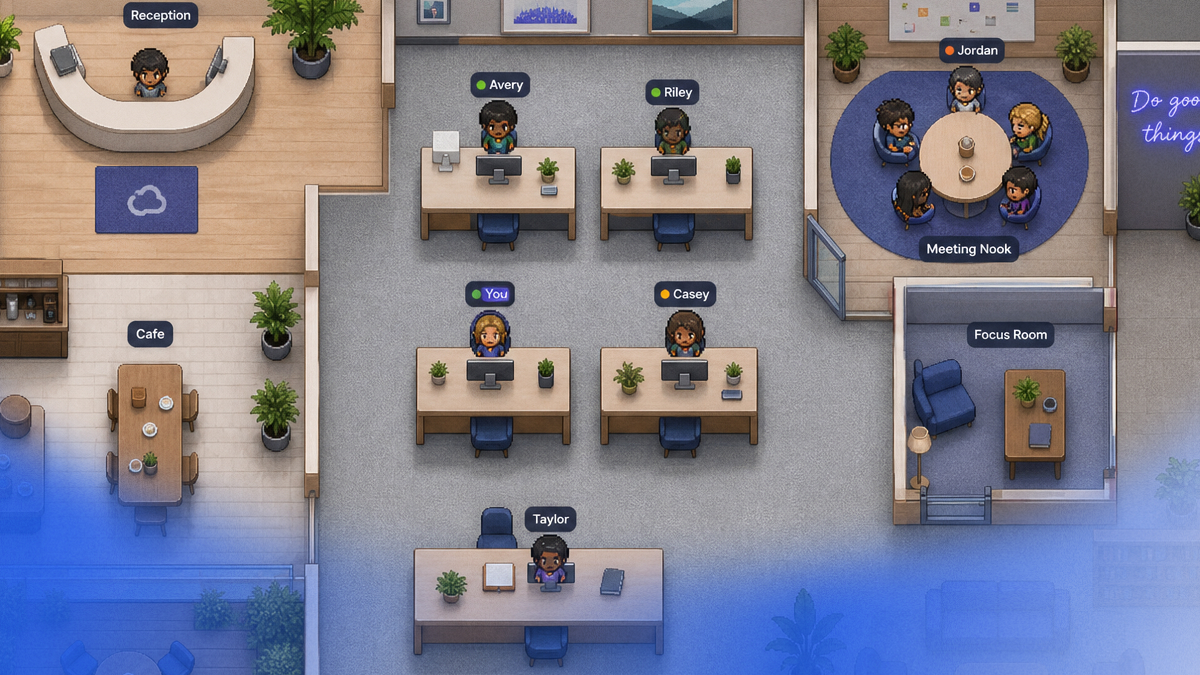
In a virtual office setting, knowing who is available is just as important as the ability to track employee hours. Platforms like Hurbly.ai bridge the gap between physical and digital workspaces by providing real-time presence indicators. While traditional tools only track employee hours as a numerical value, a virtual office environment shows who is currently focused, in a meeting, or available for a quick chat. This visibility reduces the friction often found in remote communication, where employees might hesitate to reach out not knowing if a colleague is busy.
Using a presence-based platform allows teams to:
- See the live status of every team member instantly.
- Start spontaneous conversations without the need for scheduled invites.
- Reduce the "meeting fatigue" caused by over-scheduling simple queries.
- Maintain a sense of community and shared space despite geographical distances.
By integrating the need to track employee hours with a live office view, managers can see not just that someone is "on the clock," but how they are engaging with the team. This holistic approach ensures that the data used to track employee hours reflects actual collaborative effort rather than just idle connection time.
Benefits of Automated Time Monitoring for Distributed Teams
The transition to automated systems to track employee hours eliminates human error associated with manual entry. In 2026, automation is the standard for businesses looking to scale their operations. When you track employee hours through automated software, the data is synced directly to payroll and invoicing systems, saving hours of administrative work each month. This precision is vital for freelancers and agencies who bill clients based on specific time increments.
| Feature | Manual Tracking | Automated Tracking |
|---|---|---|
| Accuracy | Low (prone to memory errors) | High (real-time logging) |
| Speed | Slow (requires manual input) | Instant (background operation) |
| Reporting | Difficult to compile | One-click report generation |
| Compliance | Harder to verify | Audit-ready logs |
Furthermore, the data collected to track employee hours serves as a diagnostic tool. If a specific project consistently requires more time than budgeted, managers can investigate the bottleneck. The objective is not just to track employee hours for surveillance, but to use that information to optimize workflows and prevent employee burnout by monitoring overtime patterns.
Integrating Workflow Transparency with Hurbly.ai
Transparency is the foundation of a healthy remote culture. While companies track employee hours to ensure contractual obligations are met, they use Hurbly.ai to foster a culture of openness. This platform allows users to see coworkers' current status, replicating the experience of glancing across a physical room. When you combine the logistical need to track employee hours with real-time visibility, you create an environment where work flows naturally.
Effective integration of these concepts involves three main steps:
- Selection of Tools: Choose a platform that supports both presence and the ability to track employee hours or integrates easily with time-logging software.
- Clear Policy Creation: Define how the team will track employee hours, including expectations for "focus mode" and "available" statuses.
- Continuous Feedback: Use the data gathered to track employee hours to have informed 1-on-1 meetings about workload and productivity.
By focusing on these elements, organizations can support their employees' needs for flexibility while maintaining the structured data required to track employee hours and manage a professional business operation in the modern era.