Strategies to Eliminate Unproductive Meetings in Remote Teams

In this article

Strategies to Eliminate Unproductive Meetings in Remote Teams
Unproductive meetings represent a significant drain on corporate resources and employee morale in 2026. When teams gather without clear objectives or structured formats, they lose valuable time that could be spent on deep work. These unproductive meetings often stem from a lack of real-time visibility into team activities, leading managers to schedule check-ins simply to gauge progress. To combat this, organizations must shift toward asynchronous communication and tools that provide transparency without the need for constant synchronization.
The financial impact of unproductive meetings is measurable through lost labor hours and delayed project timelines. For remote teams, the problem is compounded by "Zoom fatigue" and the friction of scheduling across different time zones. Reducing the frequency of unproductive meetings requires a cultural shift where documentation and instant status updates take precedence over lengthy video calls. By establishing a protocol for when a meeting is actually necessary, teams can reclaim hours of their workweek.
How Virtual Presence Reduces the Need for Meetings
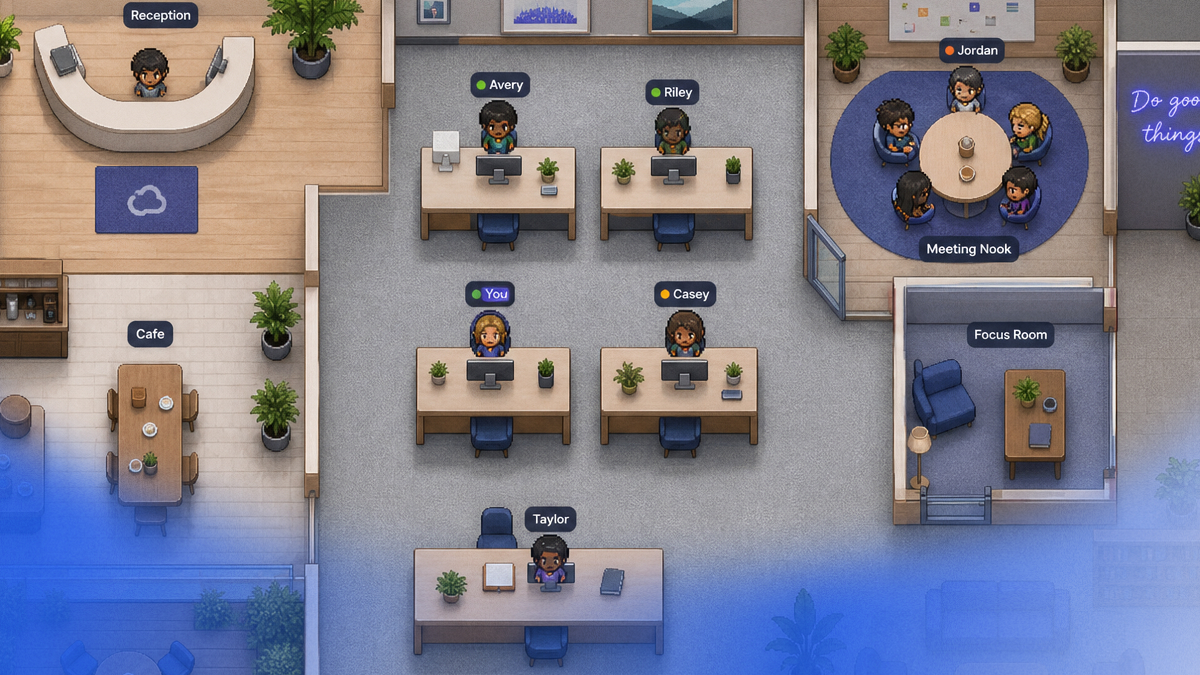
Virtual office platforms like Hurbly.ai serve as a central hub for team presence, effectively minimizing unproductive meetings. Instead of scheduling a 30-minute call to ask a simple question, users can see at a glance who is available, focused, or already engaged. This real-time visibility allows for spontaneous, short interactions that resolve issues in seconds. By replicating the physical office's "open door" feel, teams can avoid the trap of unproductive meetings that are often used as a substitute for actual presence.
When a team utilizes a digital environment to signal availability, the cycle of unproductive meetings is broken. Team members no longer feel the need to "prove" they are working through attendance in unnecessary sessions. Instead, Hurbly.ai provides a passive way to demonstrate engagement. This transparency builds trust and ensures that when a meeting does occur, it is high-stakes and essential, rather than another instance of unproductive meetings cluttering the calendar.
Practical Steps to Audit and Filter Your Calendar
To systematically remove unproductive meetings, teams should implement a strict auditing process. This involves evaluating every recurring invite and questioning its specific value to the project goals. If a meeting does not have a written agenda or a designated facilitator, it is highly likely to devolve into one of those unproductive meetings that frustrate high-performing employees.
| Action Item | Description | Impact on Productivity |
|---|---|---|
| Agenda Requirement | No agenda means no meeting. | Eliminates aimless discussion. |
| Status Dashboards | Use Hurbly.ai for real-time status. | Reduces "check-in" meetings. |
| Time Boxing | Limit all meetings to 15 or 25 minutes. | Prevents Parkinson's Law from expanding unproductive meetings. |
| Optional Attendance | Allow members to opt-out if they aren't essential. | Keeps the group small and focused. |
By following these steps, the volume of unproductive meetings decreases, allowing for more "deep work" sessions. It is important to remember that unproductive meetings are often a symptom of poor information flow; solving the flow of information usually solves the meeting problem.
Enhancing Team Communication Without Over-Scheduling
Effective communication does not require constant face-to-face interaction. In fact, over-reliance on video calls often leads to a rise in unproductive meetings. High-functioning teams in 2026 use a mix of instant messaging, recorded video snippets, and presence indicators. Platforms like Hurbly.ai allow users to start instant conversations, which are the antithesis of unproductive meetings because they are brief, topical, and conclude as soon as the information is exchanged.
- Identify the Goal: Before clicking "invite," determine if the goal is a decision, a brainstorm, or a status update.
- Choose the Medium: Status updates should be handled via Hurbly.ai or chat; only complex brainstorming deserves a live session.
- Review the Results: If a meeting ends without a clear action item, it was likely one of the many unproductive meetings that need to be eliminated.
- Transition to Asynchronous: Move as much data sharing as possible to shared documents to prevent unproductive meetings from being used for data reading.
The Role of Real-Time Availability in Modern Work
Real-time technology is the most effective tool for preventing unproductive meetings in distributed environments. When you can see that a colleague is in "Deep Work" mode on Hurbly.ai, you respect their boundaries. Conversely, seeing someone is "Available" allows for a quick chat that replaces the need for a formal invite later. This fluidity is essential for maintaining momentum and avoiding the administrative overhead of unproductive meetings.
Ultimately, the goal is to create a work environment where communication is organic. Unproductive meetings thrive in silos; when everyone knows what is happening across the team, the urgency for "alignment meetings" disappears. By integrating tools that show presence and focus, companies can ensure their staff spends less time in unproductive meetings and more time delivering actual value. Using Hurbly.ai facilitates this by making the team's status transparent and accessible at all times.