Efficient Strategies for Modern Virtual Office Design
In this article

Efficient Strategies for Modern Virtual Office Design
Virtual office design focuses on creating a digital workspace that mirrors the functionality and social dynamics of a physical environment. In 2026, remote teams prioritize presence and real-time availability to overcome the isolation of distributed work. A well-executed virtual office design allows team members to see who is currently at their desk, who is in a deep-focus session, and who is available for a quick chat. This visibility reduces the need for constant back-and-forth messaging to check availability, making the workflow more fluid and natural.
Effective virtual office design integrates various communication layers into a single interface. Instead of switching between multiple apps for video, chat, and status updates, a cohesive design brings these elements together. By using tools like Hurbly.ai, organizations can implement a virtual office design that emphasizes transparency. This approach ensures that every team member understands the collective rhythm of the office, leading to better synchronization across different time zones and departments without the friction of traditional scheduling.
Core Components of a Productive Digital Workspace
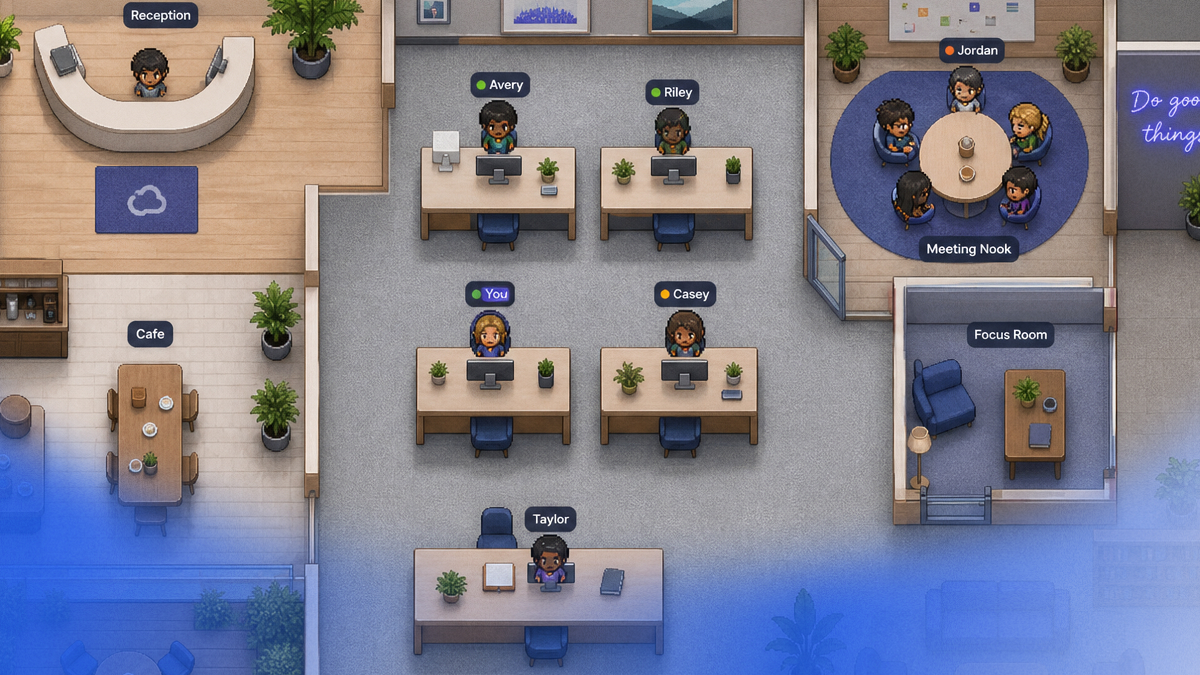
The foundation of a successful virtual office design lies in its ability to facilitate spontaneous interaction. In a physical office, you can glance over a shoulder to see if a colleague is busy; in a digital setting, the virtual office design must provide visual cues that serve the same purpose. These indicators might include color-coded status icons, activity heatmaps, or "digital rooms" where people gather for specific tasks. When these elements are clear, the team experiences fewer interruptions and higher quality collaboration.
Another critical aspect of virtual office design is the management of digital noise. A poor design overwhelms users with notifications, while a superior virtual office design filters information based on relevance and urgency. By establishing clear zones for "quiet work" and "social interaction," the virtual office design helps maintain a balance between individual productivity and team cohesion. This structured environment allows employees to enter a flow state while remaining accessible for essential team needs.
Implementing Presence-Based Collaboration
To implement an effective virtual office design, teams should focus on real-time presence technology. This technology tracks active engagement and displays it to the rest of the team instantly. For example, Hurbly.ai provides a platform where virtual office design revolves around seeing coworkers' current status, allowing for instant conversations. This removes the barrier of "calendar tetris," where simple questions require a formal 30-minute invite, thereby streamlining the decision-making process.
| Feature | Impact on Virtual Office Design |
|---|---|
| Real-time Status | Increases transparency and reduces unnecessary pings. |
| Spatial Layouts | Creates a sense of "place" and belonging for remote staff. |
| Instant Audio/Video | Facilitates quick problem-solving and social bonding. |
| Focus Mode | Protects deep work periods within the shared digital space. |
When choosing a virtual office design, it is important to consider how the interface handles transitions between tasks. A user-centric virtual office design makes it easy to move from a private focus session to a collaborative huddle. By reducing the number of clicks required to start a conversation, the virtual office design encourages more frequent, shorter interactions that keep projects moving forward without the fatigue associated with long, scheduled video conferences.
Benefits of Structured Virtual Environments
A strategic virtual office design offers significant advantages for both management and employees. For managers, it provides a high-level view of team capacity and engagement without micromanagement. For employees, a thoughtful virtual office design provides the social context often missing in remote work, such as knowing when a project milestone is being celebrated or when a colleague needs support. This sense of shared space is vital for maintaining company culture in a decentralized world.
The evolution of virtual office design in 2026 has moved toward "ambient awareness." This means the software provides just enough information to keep everyone connected without being intrusive. By prioritizing a virtual office design that values both autonomy and availability, companies can attract top talent who demand flexibility but value teamwork. Ultimately, the goal of any virtual office design is to make the digital experience as intuitive and productive as being in the same room, ensuring that distance is no longer a barrier to high-performance collaboration.