Virtual Water Cooler Ideas for Remote Teams That Actually Work (Not the Awkward Kind)
In this article

Let's be honest for a second: the phrase "virtual water cooler" makes a lot of people cringe. It conjures images of mandatory fun, forced participation, and that one Zoom happy hour where everyone awkwardly talked over each other while holding wine glasses at 4 PM on a Tuesday. We've all been there, and we understand the eye-roll.
But here's the thing, the problem was never the concept. The concept is actually really important. The water cooler, in its physical form, was never about the water. It was about the spontaneous, low-stakes conversation that happens when people share a space. The quick chat about the game last night, the commiseration about a tough client, the random "wait, you're from Cincinnati too?" moment that becomes the start of a real friendship. That kind of casual, unscheduled human connection is not a nice-to-have for teams, it's foundational to trust, collaboration, and belonging.
The failure in most "virtual water cooler" attempts isn't the intention, it's the execution. Forced interaction rarely produces organic connection. The goal is to create conditions where natural conversation can happen, not to simulate water cooler talk on command. There's a big difference. Let's get into what actually works.
The Principles Behind Good Virtual Water Cooler Moments
Before diving into specific ideas, it's worth naming a few principles that separate the good from the cringe-worthy.
Opt-in beats mandatory. If people feel required to participate, the interaction will feel performative. The best virtual water cooler moments happen because people genuinely want to be there. Design for invitation, not obligation.
Low-stakes beats high-effort. The best office water cooler conversations happened because nobody had to prepare anything. Virtual equivalents should have the same energy, easy to join, easy to leave, no performance required.
Async can be social too. Not all water cooler moments need to be real-time. Some of the most effective social connection in remote teams happens through channels, threads, and shared documents that people engage with at their own pace.
Consistency beats perfection. A low-key social touchpoint that happens every week is worth more than an elaborate event that happens once a quarter and then fades away. Build the habit, not the spectacle.
Async Virtual Water Cooler Ideas
These are the slow-burn, low-pressure social spaces that remote teams can build into their daily rhythm without requiring everyone to be online at the same time.
The daily check-in thread. A Slack or Teams channel where someone posts a casual question every morning and people answer as they start their day. Questions can rotate: "What's the first song you played today?", "What did you have for breakfast?", "What's the most random skill you have?" Keep it light, keep it human. Over time, these threads reveal personality and build familiarity.
#random or #watercooler channel with intention. Most teams have a #random channel that slowly devolves into a graveyard of memes. Give it more structure by seeding it actively: weekly prompts, a rotating "channel curator" who posts interesting content, or themed days (#MondayMoods, #FridayFavorites). The key is keeping it alive and warm rather than letting it go stale.
Show-and-tell threads. A weekly or biweekly thread where people share something from their non-work life. A photo of the new plant they're growing, the book they just finished, the view from their home office window, what they cooked last Sunday. These glimpses into people's lives build the kind of warmth that makes a team feel like a community.
The "what I'm currently..." thread. Everyone shares what they're currently reading, watching, listening to, and cooking. Simple, personal, and it inevitably sparks conversations and recommendations. Shared cultural touchpoints are social glue.
Collaborative playlists. Create a shared playlist (Spotify makes this easy) where team members add songs. It's a zero-pressure, background-level way of sharing a piece of yourself. You'd be surprised how much conversation a good playlist generates.
A team trivia board. Post a fun trivia question on Monday, let people answer throughout the week, reveal the answer on Friday. No pressure, just a little something to look forward to.
Synchronous Virtual Water Cooler Ideas
These are real-time moments that mimic the spontaneity of office interaction more closely. The trick is making them feel optional and easy.
Open virtual office hours. Have a standing video room that's always open, no agenda required. Team members can drop in when they want company, have a quick chat, or just work alongside someone for a bit. The key is that it's never required, it's there when you want it. This simulates ambient office presence better than almost anything else.
5-minute "coffee roulette" calls. Randomly pair team members for a 15-20 minute casual call with no work agenda. Tools like Donut automate the matching process. The conversations that come out of these pairings are often the most genuine connection that happens on a remote team, because there's no task pressure, just two people talking.
Virtual team lunches. Schedule a monthly video call where everyone eats lunch together. No presentations, no agendas, just lunch conversation. It sounds simple because it is. It works because it replicates a deeply human ritual (sharing a meal) in a virtual context.
End-of-week hangout. A casual Friday drop-in session for 30 minutes, no agenda, just wrapping up the week together. Some people come every week, some occasionally. Keep it low-key and it becomes a moment people genuinely look forward to.
"Around the world" calls. One per month: a video call where each team member spends two minutes showing something from their physical environment, their neighborhood, a local dish, a cultural tradition. This is especially powerful for international teams and builds genuine curiosity and appreciation across borders.
Spontaneous voice channels. If your tools support it (Discord does this natively; Hurbly's virtual office does too), having always-on voice rooms where people can drop in for a quick chat replicates the "grab someone in the hallway" feeling. No scheduling, no formality, just presence.
Gamified Virtual Water Cooler Ideas
A little friendly competition is one of the best social accelerants there is. These ideas add a game layer to your team's social life without being overly elaborate.
Team trivia tournaments. Monthly bracket-style trivia competitions using tools like Kahoot or Jackbox. Mix general knowledge with company-specific questions ("Which teammate spent a year living in Japan?"). Wildly effective for engagement and laughs.
Photo challenges. Monthly photography prompts, "your best sunset this month," "most interesting coffee mug," "something blue." Post them in a channel and vote on favorites. These generate enormous engagement with minimal effort.
Friendly bingo. "Remote work bingo" cards with squares like "accidentally muted yourself," "cat walked across keyboard," "answered a Slack message while brushing teeth." Shared experience humor is incredibly bonding.
Skill showcases. One team member per month volunteers to teach the team something they're good at in a 20-minute session. Origami, a basic cocktail recipe, a yoga pose, how to change a bike tire. No professional skills required, better if they're personal ones. These sessions reveal people in new ways and are consistently popular.
Reading or watching clubs. A book club where one person picks something per month, or a "watch the same show" club where everyone watches an episode of something and then discusses it. Shared cultural experiences create shared reference points.
Making It Stick: The Infrastructure for Casual Connection
The best virtual water cooler ideas in the world won't work if they're not embedded in how your team actually operates. A few structural things that help:
Assign a social culture owner. Not a full-time role, but someone (rotating or permanent) who's responsible for seeding social channels, scheduling the casual touchpoints, and generally keeping the informal layer alive. Culture doesn't maintain itself.
Protect the space for informal interaction. Don't let work conversations colonize your social channels. If every thread in #random ends up being about a project, people will stop using it for genuine socializing.
Include it in onboarding. Make sure new hires are explicitly introduced to the social infrastructure, the channels, the rituals, the norms. They won't naturally discover it on their own, and missing out on social connection during onboarding is one of the biggest contributors to early disconnection.
Follow the energy. Pay attention to what people actually engage with. If the trivia threads get ten responses and the photo challenges get two, do more trivia. Don't keep running things that aren't resonating just because you planned them.
How Hurbly Is Your Team's Virtual Water Cooler
The challenge with most virtual water cooler solutions is that they require intentional action to engage with, you have to open the app, find the channel, decide to participate. Hurbly takes a different approach: it's a virtual office where your team is already present throughout the day, which means casual interaction happens the same way it does in a physical office, naturally, when the moment presents itself.
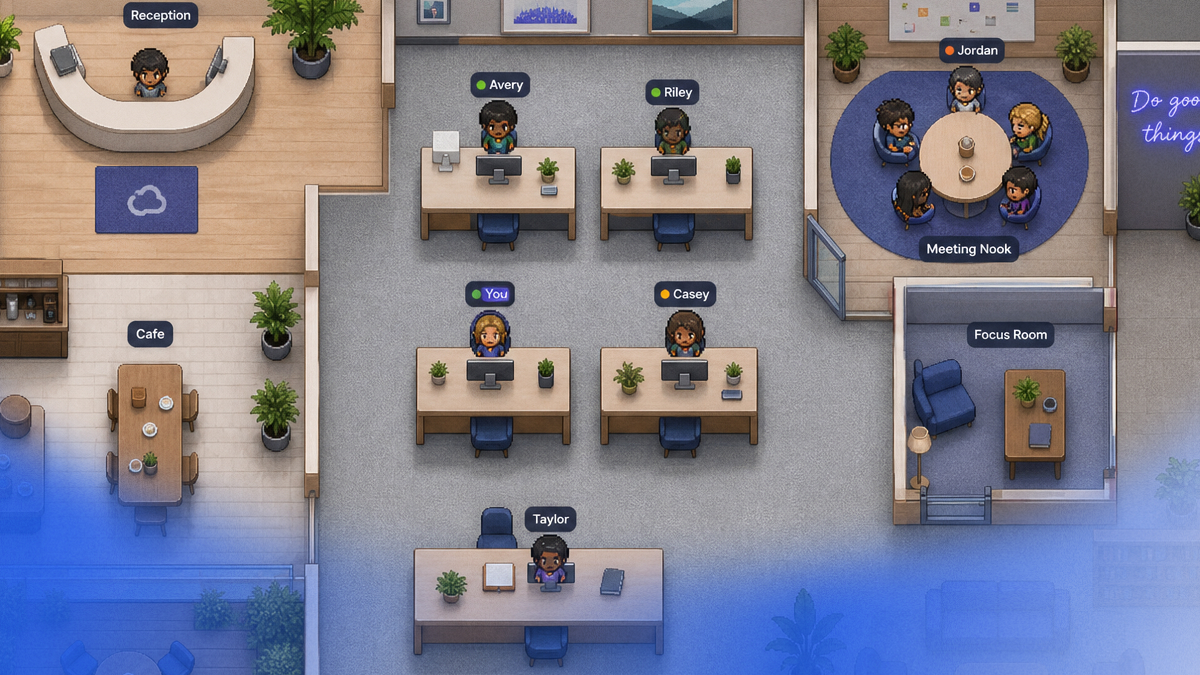
When your team is in Hurbly, you can see who's available, who's in a conversation, who's just finished a meeting and might be up for a quick chat. You can walk over to someone's virtual space without scheduling anything. You can have the same spontaneous "hey, did you see that email?" conversation that you'd have by a real water cooler, because the shared space makes it possible.
Pair that ambient presence with Hurbly's social spaces and you have a genuine virtual water cooler that doesn't require anyone to do anything special to make it work. It just works, because your team is there.
Try Hurbly free for 30 days and find out what your team has been missing.
Frequently Asked Questions
Q: How do we get introverted team members to participate in virtual social activities?
A: The best approach for introverts is async-first social options, threads, channels, and written contributions they can engage with at their own pace without the pressure of real-time performance. When you do have synchronous activities, keep them short, optional, and low-stakes. Many introverts actually enjoy team social moments; they just need them to feel safe and non-coercive. Never call out non-participation publicly.
Q: How often should we do virtual water cooler activities?
A: More frequent and lower-effort beats occasional and elaborate. A daily async touchpoint (like a check-in thread), a weekly sync social moment (like a coffee roulette or casual hangout), and a monthly bigger event (virtual lunch, game, skill showcase) is a solid foundation. Adjust based on your team's size and preferences.
Q: What if our virtual social events have low attendance?
A: First, check whether they're truly optional or subtly mandatory (people can tell the difference). Second, ask why, is the format wrong? The timing? The topic? A quick anonymous survey can surface honest feedback. Third, try different formats until something clicks. Low attendance isn't a signal that your team doesn't want social connection; it's usually a signal that the specific format isn't working.
Q: Do virtual social activities actually improve work performance, or are they just nice to have?
A: Research on team cohesion and psychological safety consistently shows that teams who have genuine relationships with each other perform better, higher creativity, better collaboration, more willingness to take risks and share ideas. So yes, virtual social activities are a performance investment, not just a perks perk. The connection is real.
Q: Our team is in many different time zones. How do we do virtual water cooler activities fairly?
A: Lean heavily into async social options that anyone can participate in at their own time. For synchronous activities, rotate the timing so no one group always gets the inconvenient slot. You can also run two sessions of the same event at different times to maximize inclusion. The goal is for everyone to feel like they have access to social connection, even if not always at the same moment.
Want your remote team to actually feel connected? Try Hurbly free for 30 days →