Enhancing Remote Collaboration with Zoom Immersive View

In this article

Enhancing Remote Collaboration with Zoom Immersive View
The digital workplace has evolved significantly by 2026, moving beyond simple video grids to more engaging environments. A key development in this space is the Zoom Immersive View, a feature designed to place meeting participants within a shared, cohesive digital background. Instead of viewing colleagues in separate rectangular boxes, this technology extracts participants from their individual backgrounds and places them into a unified scene, such as a boardroom, a classroom, or an open-air cafe. This shift reduces the psychological distance between remote team members by simulating a physical presence in a shared space.
Understanding how Zoom Immersive View functions is essential for teams looking to improve meeting dynamics. The host of a meeting selects a specific layout, and the software automatically scales and positions participants to fit the chosen environment. This visual alignment helps minimize "meeting fatigue" because the brain doesn't have to process multiple different backgrounds simultaneously. By focusing on a single, consistent setting, participants can engage more naturally with the content and each other.
Technical Requirements and Setup for Zoom Immersive View
To effectively deploy Zoom Immersive View, users must ensure their hardware and software meet specific standards. The feature requires a stable internet connection and sufficient processing power to handle real-time background removal and participant layering. When a host activates Zoom Immersive View, they have the option to manually move participants around the virtual scene or let the system handle placement automatically. This flexibility allows for structured seating arrangements, which can be particularly useful for formal presentations or educational lectures.
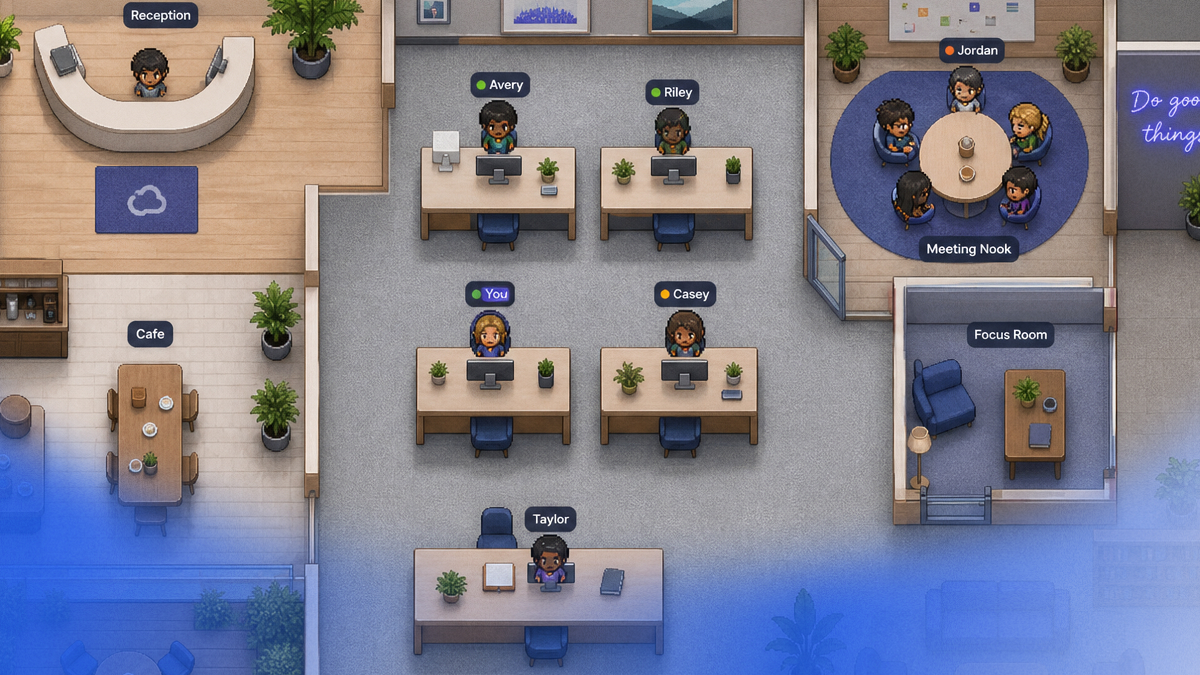
For those seeking to optimize their virtual workspace beyond scheduled meetings, integrating tools like Hurbly.ai can provide a continuous sense of presence. While Zoom Immersive View excels during active video calls, a virtual office platform helps maintain team visibility throughout the workday. The following table compares standard video layouts with the immersive approach:
| Feature | Standard Grid View | Zoom Immersive View |
|---|---|---|
| Visual Context | Individual backgrounds | Shared virtual environment |
| Participant Scaling | Fixed box sizes | Dynamic scaling to fit the scene |
| Engagement Level | Moderate (prone to fatigue) | High (simulates physical proximity) |
| Customization | Limited to individual blur/images | Host-controlled shared scenes |
Practical Applications of Zoom Immersive View in 2026
The use cases for Zoom Immersive View extend across various professional and educational sectors. In a corporate setting, a manager might use a virtual conference room scene to conduct a performance review, making the interaction feel more personal and less like a standard video call. In the education sector, teachers utilize Zoom Immersive View to place students at virtual desks, recreating the classroom atmosphere which helps younger learners stay focused and feel connected to their peers.
Furthermore, creative teams often leverage Zoom Immersive View during brainstorming sessions. By placing everyone in a virtual art gallery or a creative studio, the environment itself can stimulate innovation. The ability to change the scene based on the meeting's objective makes Zoom Immersive View a versatile tool for maintaining high levels of interest. Transitioning between different scenes is seamless, allowing the host to adapt the environment as the meeting agenda progresses from a formal report to a casual social hour.
Improving Team Presence and Interaction
While Zoom Immersive View provides a powerful visual for active discussions, the modern remote team also needs to manage spontaneous interactions. This is where the synergy between meeting tools and presence platforms becomes evident. Using Hurbly.ai allows team members to see who is available for a quick chat before initiating a full session using Zoom Immersive View. This combination ensures that communication is not just frequent, but also high-quality and contextually appropriate.
To get the most out of Zoom Immersive View, consider these best practices:
- Choose a scene that matches the number of participants to avoid empty virtual seats.
- Ensure participants have adequate lighting so the background removal remains crisp.
- Use the manual placement feature in Zoom Immersive View to group speakers together.
- Update your software regularly to access new virtual environments and improved rendering.
The Future of Virtual Meetings and Zoom Immersive View
As we look further into 2026, the integration of spatial audio and high-definition rendering will likely enhance Zoom Immersive View even further. The goal is to make digital interactions indistinguishable from face-to-face meetings. By utilizing Zoom Immersive View, organizations are investing in the mental well-being of their employees by creating a more human-centric digital experience. This technology bridges the gap between the flexibility of remote work and the social benefits of a physical office.
Ultimately, the success of a remote team depends on the tools they use to stay connected. Whether it is through the visual depth provided by Zoom Immersive View or the real-time availability tracking of Hurbly.ai, the objective remains the same: reducing friction in collaboration. As Zoom Immersive View continues to evolve, it will remain a cornerstone for teams that prioritize clear communication and a strong internal culture, regardless of where their members are located globally.